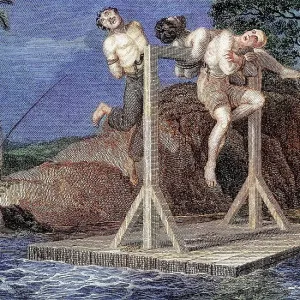
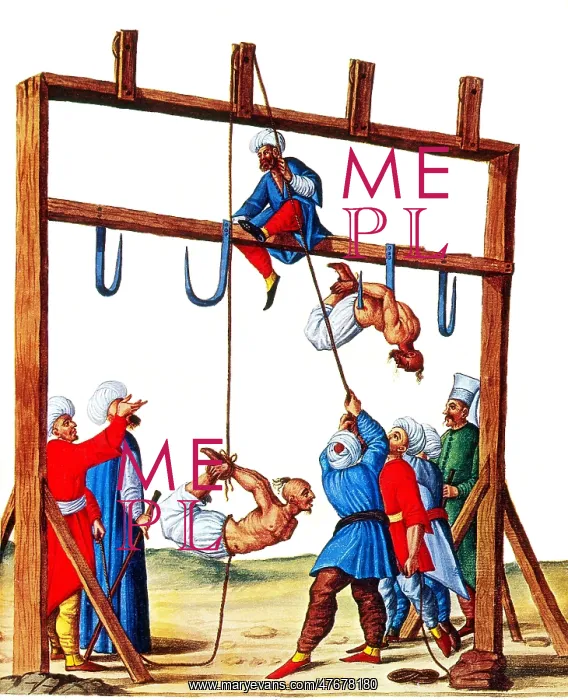
Impalement, Method of Torture and Execution, 1590s
Entitled: The Execution of Christians, Turks and Jews, 1590s. Impalement, as a method of execution and also torture, is the penetration of a human by an object such as a stake, pole, spear, or hook, often by complete or partial perforation of the torso. It was used particularly in response to crimes against the state and regarded across a number of cultures as a very harsh form of capital punishment and recorded in myth and art. Impalement was also used during wartime to suppress rebellion, punish traitors or collaborators, and as a punishment for breaches of military discipline. Offenders have also been impaled for a variety of cultural, sexual and religious reasons. References to impalement in Babylonia and the Neo-Assyrian Empire are found as early as the 18th century BC. Within the Ottoman Empire, this form of execution continued into the 20th century
Pick your License
Restrictions Only for Ireland and United Kingdom
1590s Christians Cruel Cruelty Execute Executed Executing Harsh Hook Impale Impaled Impalement Impaling Infamous Inhumane Inhumanity Method Notorious Persecute Persecuted Persecuting Persecution Punish Punishing Sixteenth Suffering Torturer Torturing Turks
Features In These Collections
> Contributors > PHR