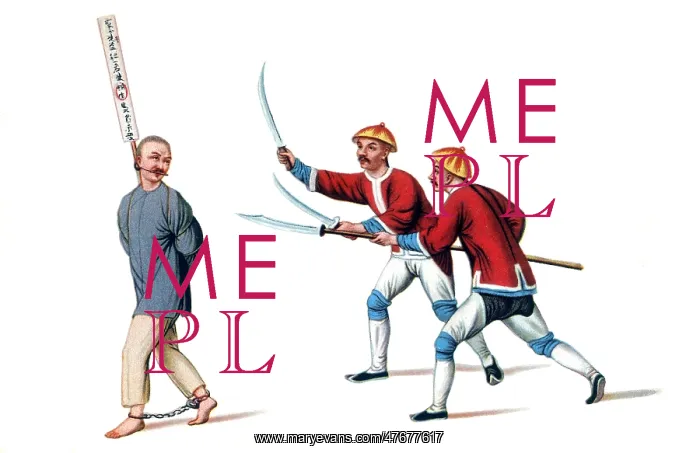
Imperial China, Prisoner Led to Execution, 1799
The Five Punishments was the collective name for a series of physical penalties meted out by the legal system of pre-modern Dynastic China. Over time, the nature of the Five Punishments varied. One of the Five Punishments in Imperial China was Si, death. Following the Sui and Tang Dynasties there were generally two options: strangulation or decapitation. In traditional China, decapitation was considered a more severe form of punishment than strangulation, although strangulation caused more prolonged suffering. This was because in Confucian tradition bodies were gifts from their parents, and so it was therefore disrespectful to their ancestors to return their bodies to the grave dismembered. The Chinese however had other punishments, such as dismembering the body into multiple pieces. In addition, there was also a practice of cutting the body at the waist, which was a common method of execution before being abolished in the early Qing dynasty due to the lingering death it caused. In some tales, people did not die immediately after decapitation
Pick your License
Restrictions Only for Ireland and United Kingdom
1700s 1790s 1799 Behead Beheaded Beheading Decapitate Decapitated Decapitation Eighteenth Execute Executed Executing Executioners Humiliation Manchu Punish Punishing Punishments Qing
Features In These Collections
> Contributors > PHR