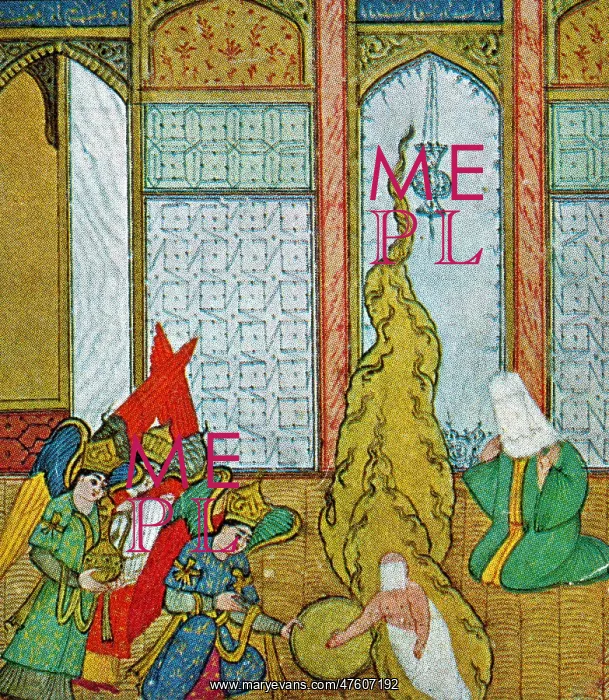
Islamic Ablution on the Infant Muhammad
A Persian miniature taken from the Siyer-i Nebi is a Turkish epic about the life of Muhammad, completed around 1388. The Ottoman ruler Murad III commissioned a lavish illustrated copy of the work. The calligrapher Lutfi Abdullah completed the work in 1595. Personal Hygiene in Islam is of the utmost importance. Hygiene and purity are not just simply acts of worship but a part of a Muslims faith. The Prophet Muhammad said, No prayer is accepted without ablution. Ablution (Wudu) means to remove dirt, filth, and other impurities. The illustration is captioned: As an infant, the Prophet was visited by more angels bearing a pitcher, a basin and a towel to inaugerate the ritual ablutions Muslims have performed ever since, before offering prayers to God. The prophet Muhammad is always shown veiled
Pick your License
Restrictions Only for Ireland and United Kingdom
1595 Abdullah Ablution Anthropology Arabic Basin Calligrapher Calligraphy Divine Highly Inaugurate Legislator Lufti Messenger Mohammed Muhammad Muhammed Muhhamed Nebi Orator Persia Pitcher Praised Prophet Reformer Syer Towel Veiled Winged
Features In These Collections
> Contributors > PHR