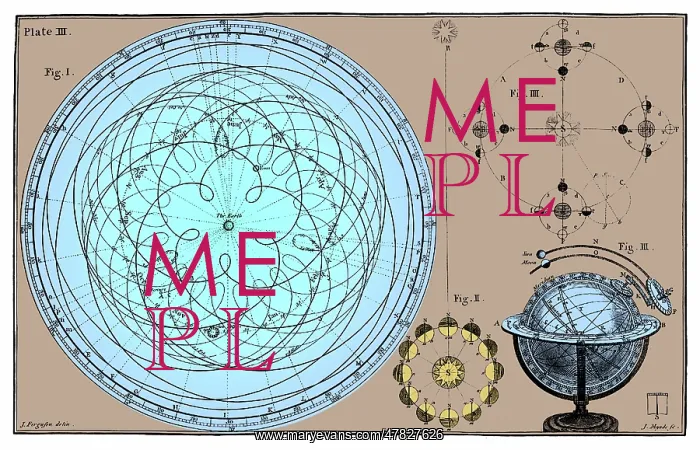
James Ferguson, Proof Against the Ptolemaic System, 1756
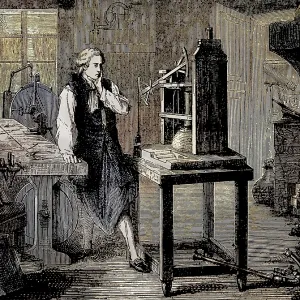
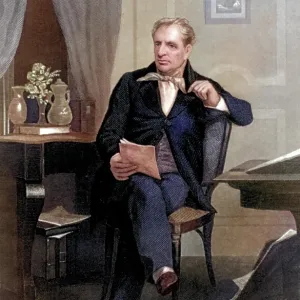
Astronomy Explained Upon Sir Isaac Newton's Principles, And Made Easy to Those who Have Not Studied Mathematics by James Ferguson. Figure I (left) shows the Earth at center, with the Sun tracing a circular orbit. The orbits of Mercury and Venus in this geocentric system are shown by a series of complex epicycles. Figure IIII (upper right) shows the phases of the Moon. Figure III (lower right) shows the Sun and Moon and the celestial equator and ecliptic, and Earth's axial inclination. Figure II shows how the Earth's axial tilt causes the seasons. James Ferguson (April 25, 1710 - November 17, 1776) was a Scottish astronomer and instrument maker. After his father taught him to write, he was sent to the grammar school for three months and that was all the formal education he ever received. In 1720 he was sent to a neighboring farm to keep sheep, where he amused himself by making models of machines, and at night he studied the stars. In 1734 he went to Edinburgh, where he began to make portraits in miniature to himself and his family for many years. He wrote papers for the Royal Society of London, devised astronomical and mechanical models, and in 1748 began to give public lectures on experimental philosophy. His passion for his subject, his clear explanations with diagrams, made him one of the most successful of popular lecturers on scientific subjects. He is best remembered as inventor and improver of astronomical and other scientific apparatus. He died in 1776 at the age of 66
Pick your License
Restrictions Only for Ireland and United Kingdom
1710 1720 1734 1748 1750s 1756 1776 Amused Astronomer Astronomical Axial Causes Celestial Clear Devised Diagrams Ecliptic Equator Experimental Explained Explanations Geocentric Grammar Iiii Improver Inclination Isaac Lecturers Lectures Mathematics Mechanical Mercury Neighboring Orbit Orbits Phases Philosophy Principles Proof Ptolemaic Remembered Studied Subjects Taught Tilt Tracing Write Wrote
Features In These Collections
> Contributors > PHR