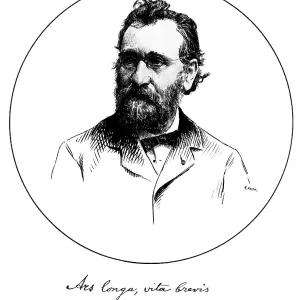
James Franck, German Physicist
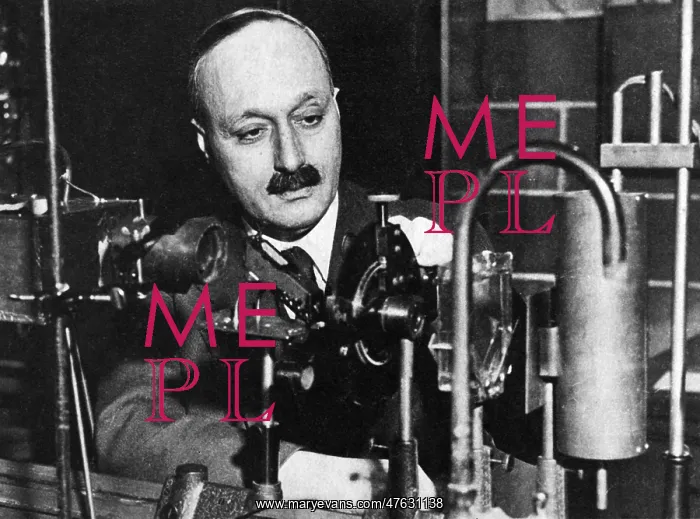
James Franck (26 August 1882 - 21 May 1964) was a German physicist. Franck was born to a Jewish family. He completed his Ph.D. in 1906 at the University of Berlin. He served in World War I and received the Iron Cross. In 1920, he became a professor of experimental physics and Director of the Second Institute for Experimental Physics at the University of Gottingen. While there he worked on quantum physics with Max Bor. In 1925, he received the Nobel Prize in Physics, mostly for his work in 1912-1914, which included the Franck-Hertz experiment, an important confirmation of the Bohr model of the atom. In 1933, after the Nazis came to power he left Germany and continued his research in the United States, first at Johns Hopkins University and then, after a year in Denmark, in Chicago. He was also the chairman of the Committee on Political and Social Problems regarding the atomic bomb. The committee is best known for the compilation of the Franck Report, finished on June 11, 1945, which recommended not to use the atomic bombs on the Japanese cities, based on the problems resulting from such a military application. He died in 1964 at the age of 81