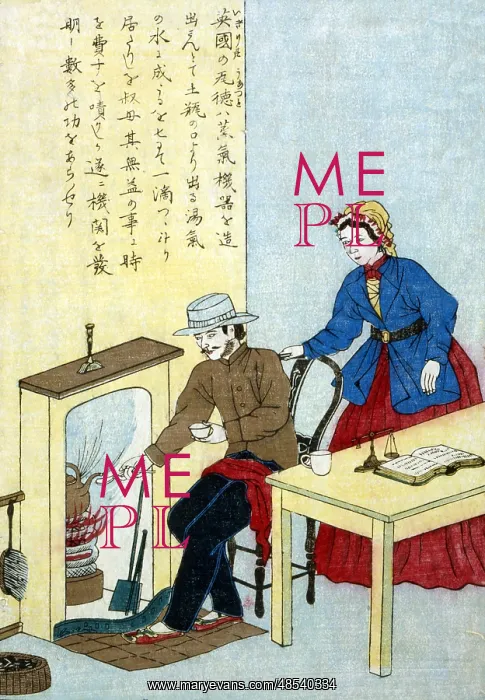
James Watt, Scottish Engineer and Inventor
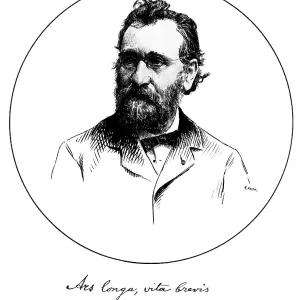
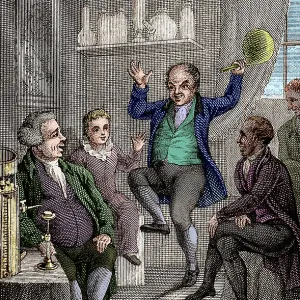
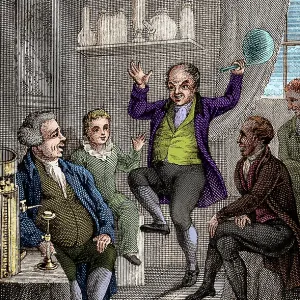
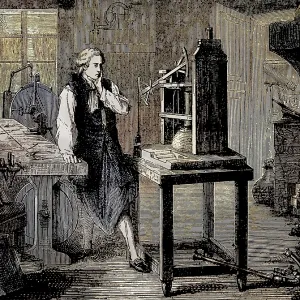
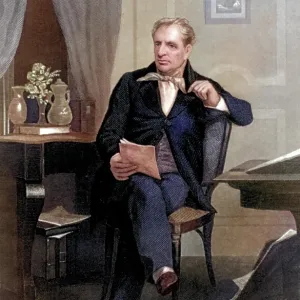
Entitled: Japanese print shows Watt collecting steam from a boiling kettle while his aunt rebukes him for his nonsense. James Watt (January 30, 1736 - August 25, 1819) was a Scottish inventor and mechanical engineer whose improvements to the Newcomen steam engine were fundamental to the changes brought by the Industrial Revolution. Watt introduced a design enhancement, the separate condenser, which avoided this waste of energy and radically improved the power, efficiency, and cost-effectiveness of steam engines. Some of his inventions include the double acting engine where the piston both pushes and pulls (1782), the centrifugal governor (1788), and the pressure gauge (1790). In 1785, Watt was made a Fellow of the Royal Society. He developed the concept of horsepower and the SI unit of power, the watt, was named after him. He died in 1819 at the age of 83. Watt has been described as one of the most influential figures in human history. Hosho paper, woodcut, Japanese Department of Education, circa 1850-1900
Pick your License
Restrictions Only for Ireland and United Kingdom
1700s 1736 1819 Eighteenth Mechanical Watt Woodblock
Features In These Collections
> Contributors > PHR