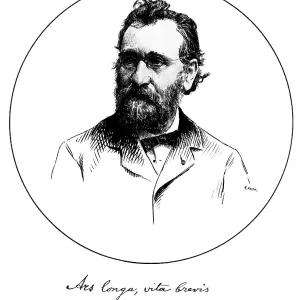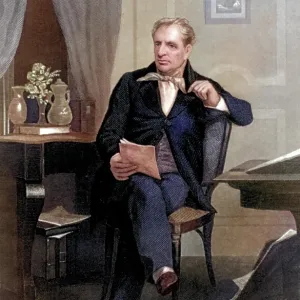

Jean-Francois Champollion, French Egyptologist
Jean-Francois Champollion (December 23, 1790 - March 4, 1832) was a French scholar, philologist and orientalist, known primarily as the decipherer of the Egyptian hieroglyphs and a founding figure in the field of egyptology. In 1822 Champollion published his first breakthrough in the decipherment of the Rosetta hieroglyphs, showing that the Egyptian writing system was a combination of phonetic and ideographic signs - the first such script discovered. In 1829 he traveled to Egypt where he was able to read many hieroglyphic texts that had never before been studied, and brought home a large body of new drawings of hieroglyphic inscriptions. Home again he was given a professorship in egyptology, but only lectured a few times before his health, ruined by the hardships of the Egyptian journey, forced him to give up teaching. He died of an apoplectic attack (stroke) in Paris in 1832 at the age of 41. Although some argue that he should have acknowledged the contributions of Young, his decipherment is universally accepted and has been the basis for all further developments in the field
Pick your License
Restrictions Only for Ireland and United Kingdom
Champollion Decipher Egyptologist Egyptology Egyptomania Hieroglyphic Hieroglyphs Jean-francois Jeune Orientalist Philologist Prodigy Rosetta Scholar
Features In These Collections
> Contributors > PHR