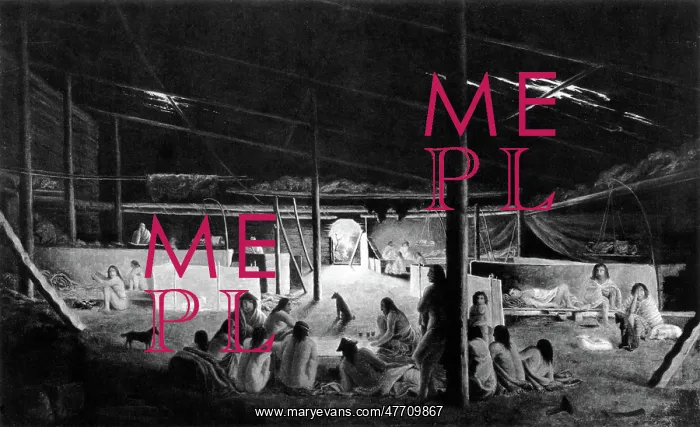
Klallam Indian Winter Encampment
Before the arrival of Europeans to the Pacific Northwest the territory inhabited by the Klallam stretched across the north coast of the Olympic Peninsula from the Pacific Ocean to Puget Sound and also included the southern tip of Vancouver Island across the Strait of Juan de Fuca. Klallam villages were mostly located along the coast, while some villages were inland along rivers, inlets or large lakes. The summer homes of the Coastal and Puget Sound Indians were temporary lodges built of bushes or bark. Little shelter was needed except during the winter when the weather was cold and rainy for long periods of time, then permanent houses were built. Cedar planks were cut using wedges made of elkhorn or with chisels of beaver teeth and flint. From these planks and logs rectangular houses 40 to 100 feet or more in length and 14 to 20 feet wide were built with a roof structure similar to tiles. The roof slats could be adjusted to let out the smoke from the cooking fire and let in light. Paul Kane (September 3, 1810 - February 20, 1871) was an Irish-born Canadian painter famous for his paintings of First Nations peoples in the Canadian West and in the Columbia District
Pick your License
Restrictions Only for Ireland and United Kingdom
Encampment Ethnography Plank Salvage
Features In These Collections
> Contributors > PHR