Liberal Arts, Personification of Dialectics
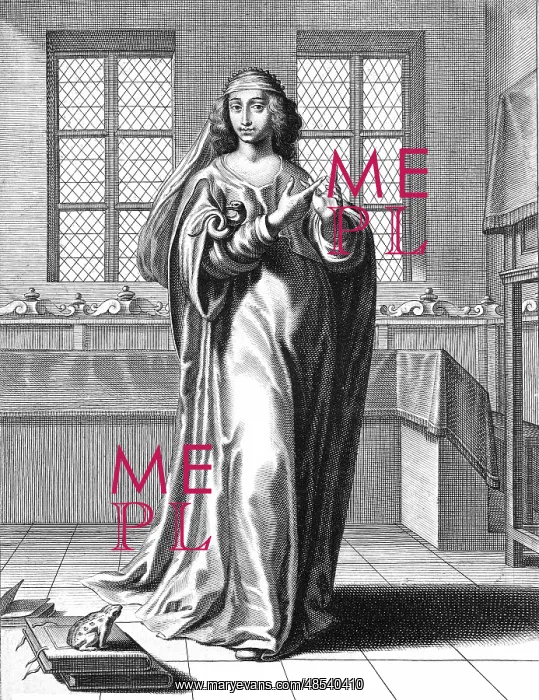
Entitled: Dialectic: a young woman standing in a decorated interior and touching her right index finger to her left middle finger in a counting gesture, at her feet is a toad seated on a stack of books, from the series The liberal arts (Les arts liberaux). The liberal arts are those subjects or skills that in classical antiquity were considered essential for a free person to know in order to take an active part in civic life. Grammar, logic, and rhetoric were the core liberal arts (Trivium), while arithmetic, geometry, the theory of music, and astronomy (or astrology) also played a part in education (Quadrivium). In the Renaissance, humanists re-christened the old Trivium with a new and more ambitious name: Studia humanitatis, they downplayed logic as opposed to the traditional Latin grammar and rhetoric, and added to them history, Greek, and moral philosophy (ethics), with a new emphasis on poetry as well. The educational curriculum of humanism spread throughout Europe during the 16th century and became the educational foundation for the schooling of European elites, the functionaries of political administration, the clergy, and the learned professions of law and medicine. The ideal of a liberal arts, grounded in classical languages and literature, persisted until the middle of the 20th century. Engraving by Gilles Rousselet, 1633-35
Pick your License
Restrictions Only for Ireland and United Kingdom
1630s Curriculum Dialectics Educate Educating Educational Gilles Higher Humanism Humanitatis Liberalia Liberalis Liberaux Personification Personified Personify Pursuits Rousselet Seventeeth Studia
Features In These Collections
> Contributors > PHR