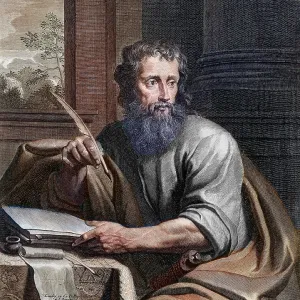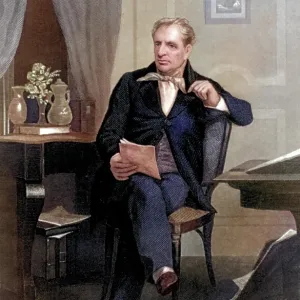
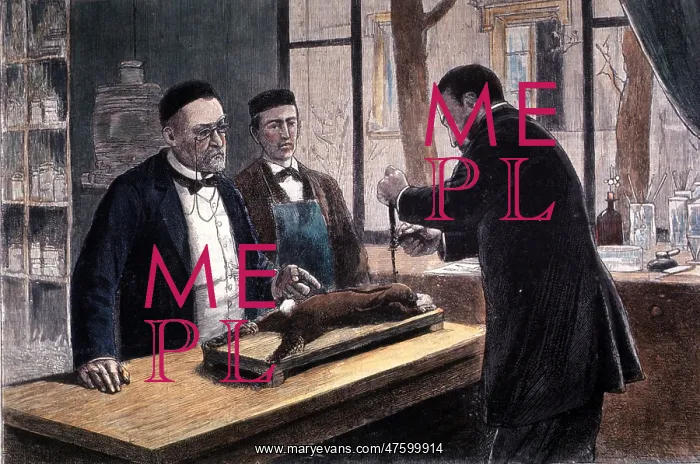
Louis Pasteur, French Chemist and Bacteriologist
Pasteur at table, with two assistants, directing experiment on chloroformed rabbit. Louis Pasteur (1822-1895) French chemist and bacteriologist who founded the science of microbiology. Pasture discovered that disease could be caused by bacteria transmitted from person to person (the germ theory of disease). He also developed vaccines for rabies and anthrax. Pasteur also found that lightly heating food and beverages could preserve them from souring. This pasteurization process is now widely used in the food industry. As a chemist, Pasteur discovered that some crystals had two forms, one which would rotate plane-polarized light to the left, and the other would rotate light to the right. This led to the study of stereochemistry
Pick your License
Restrictions Only for Ireland and United Kingdom
1822 Anthrax Assistants Bacteria Bacteriologist Bacteriology Breakthrough Bunny Chemistry Developed Fermentation Germ Hydrophobia Innovation Inoculate Inoculation Microbiological Microbiologist Microbiology Pasteur Pasteurization Pasteurized Preservation Preserve Rabies Silkworm Stereochemistry Theory Transmitted Vaccination Vaccine
Features In These Collections
> Contributors > PHR