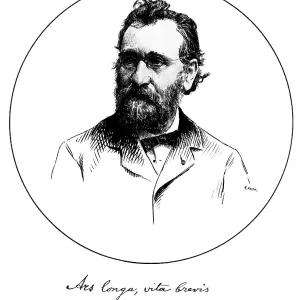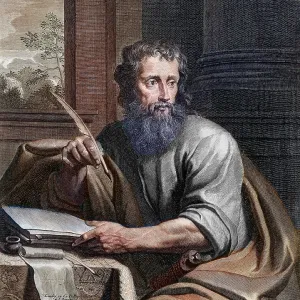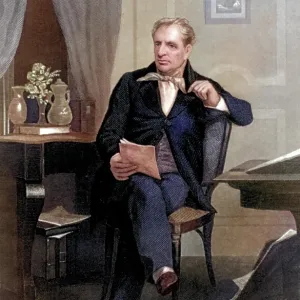

Marie Francois Xavier Bichat, French Histologist
Marie Francois Xavier Bichat (November 14, 1771 - July 22, 1802) was a French anatomist and physiologist. Bichat is best remembered as the father of modern histology and pathology. Bichat's main contribution to medicine and physiology was his perception that the diverse body of organs contain particular tissues or membranes, and he described 21 such membranes, including connective, muscle, and nerve tissue. Bichat did not use a microscope because he distrusted it, therefore his analyses did not include any acknowledgement of cellular structure. He was the first to introduce the notion of tissues as distinct entities. He maintained that diseases attacked tissues rather than whole organs. Bichat defined life as those set of functions which resist death'. He thought animals exhibited vital properties which could not be explained through physics or chemistry. In 1796, he and several other colleagues formally founded the Societe d'Emulation de Paris, which provided an intellectual platform for debating problems in medicine. He died at age 30, fourteen days after falling down a set of stairs at Hotel-Dieu and acquiring a fever
Pick your License
Restrictions Only for Ireland and United Kingdom
1771 1802 Anatomist Bichat Eiffel Histology Physiologist Xavier
Features In These Collections
> Contributors > PHR