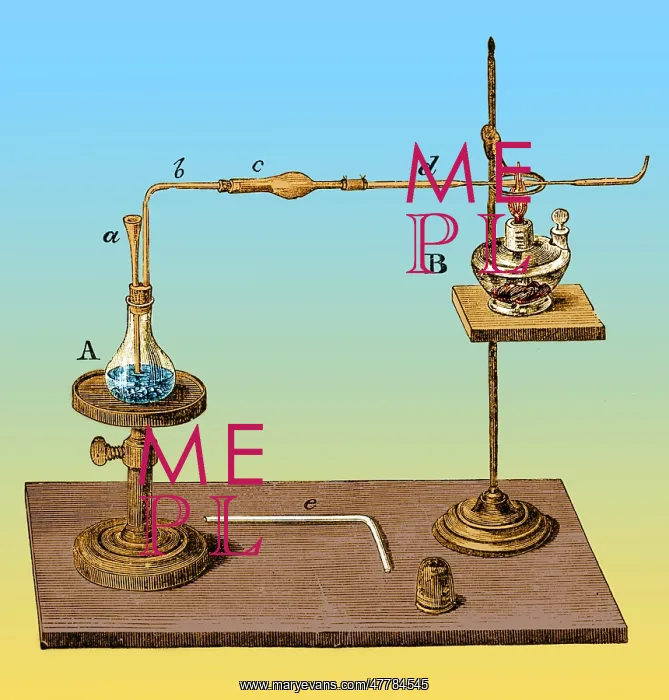
Marsh Test Apparatus, 1867
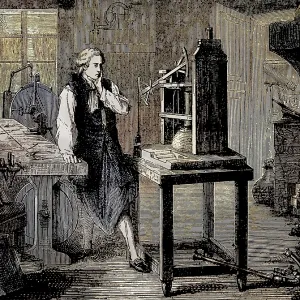
Marsh Test Apparatus, Steel engraving, 1867. The Marsh test is a method for the detection of minute amounts of arsenic in foods (the residue of fruit spray) or in stomach contents. The sample is placed in a flask with arsenic-free zinc and sulfuric acid. Arsine gas (also hydrogen) forms and is led through a drying tube to a hard glass tube in which it is heated. The arsenic is deposited as a mirror just beyond the heated area and on any cold surface held in the burning gas emanating from the jet. Antimony gives a similar test, but the deposit is insoluble in sodium hypochlorite, whereas arsenic will dissolve. The test was named for its inventor, the English chemist James Marsh
Picture No
13346427
Media ID
47784545
Size
3000px x 3138px
(1.4MB)
Credit
© Science Source / Mary Evans Picture Library
Usage Restrictions
Commercial sales may require 3rd party clearance
Source
Science Source