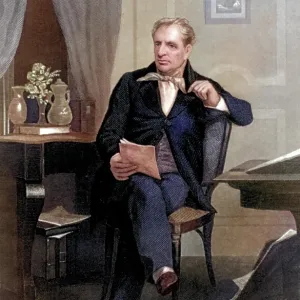

Marshall Warren Nirenberg, Nobel Prize 1968
In 1959, Marshall Warren Nirenberg (b. 1927) began his investigations into the relationship between deoxyribonucleic acid (DNA), ribonucleic acid (RNA) and the production of proteins. With J. Heinrich Matthaei, a young postdoctoral researcher from Bonn, Germany, he initiated a series of experiments using synthetic RNA. These two researchers were able to show how RNA transmits the messages that are encoded in DNA and direct how amino acids combine to make proteins. These experiments became the foundation of Nirenberg's groundbreaking work on the genetic code, which he first made public at the International Congress of Biochemistry in Moscow in August 1961. By early 1962, the significance of these early experiments was recognized throughout the world, after the popular media highlighted the importance of their work as a major scientific breakthrough. After Matthaei's departure from the NIH in 1962, Nirenberg continued his work on the genetic code with a team of postdoctoral fellows and research technicians. By 1966, Nirenberg had deciphered all the RNA codons'--the term used to describe the code words of messenger RNA--for all twenty major amino acids. Two years later, in 1968, Nirenberg received the Nobel Prize in Physiology or Medicine for interpretation of the genetic code and its function in protein synthesis. He shared the award with Robert W. Holley of Cornell University and Har Gobind Khorana of the University of Wisconsin at Madison. After Nirenberg's research on the genetic code, he turned to the field of neurobiology. Nirenberg chose neurobiology because it is the only other biological system besides the genetic code that is designed for information processing. DNA processes genetic information, and the brain processes mental information. The new scientific arena gave Nirenberg the freedom to ask new questions, solve new problems, and explore new biological puzzles. Nirenberg would devote the next thirty years of his scientific career to the investigation of various aspects of neurobiology
Pick your License
Restrictions Only for Ireland and United Kingdom
Biochemist Genes Genetic Geneticist Genetics Gobind Holley Khorana Laureate Neurobiology Nirenberg Researcher Synthetic
Features In These Collections
> Contributors > PHR