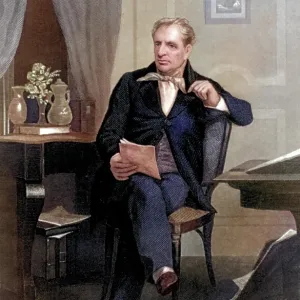
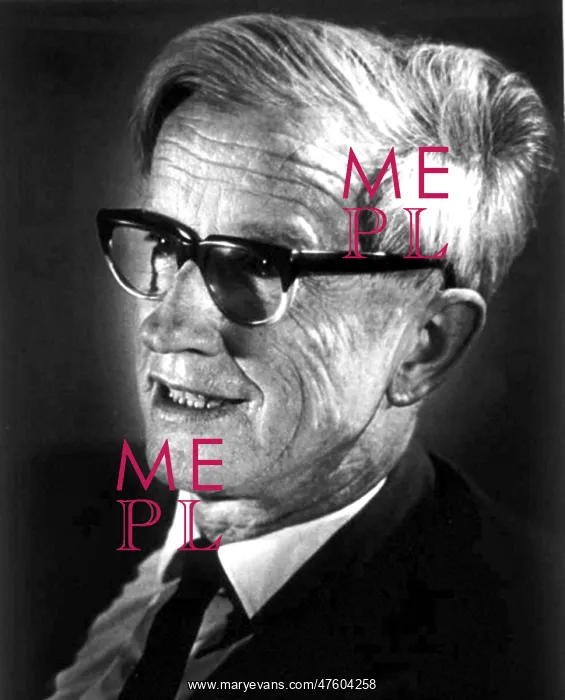
Max Delbr?ck, German-American Biophysicist
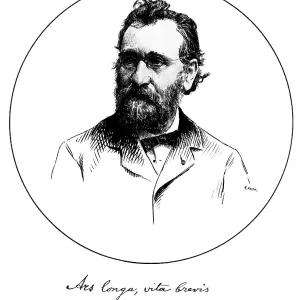
Max Ludwig Henning Delbr?ck (September 4, 1906 - March 9, 1981) was a German-American biophysicist. He studied astrophysics, but shifted to theoretical physics, at the University of G"ttingen and got his PhD in 1930. He met Wolfgang Pauli and Niels Bohr, who interested him in biology. He returned to Berlin in 1932 as an assistant to Lise Meitner, who was collaborating with Otto Hahn on irradiation of uranium with neutrons. In 1937, he attained a Rockefeller Foundation fellowship to research genetics of the fruit fly, Drosophila melanogaster. While at Caltech, he researched bacteria and their viruses (bacteriophages or phages). In 1939, with E.L. Ellis, he co-authored a paper, The growth of bacteriophage, reporting that the viruses reproduce in one step, not exponentially as do cellular organisms. In 1942, he and Salvador Luria of Indiana University demonstrated that bacterial resistance to virus infection is mediated by random mutation. This research, known as the Luria-Delbr?ck experiment, notably applied mathematics to make quantitative predictions, and earned them the 1969 Nobel Prize in Physiology or Medicine. Delbr?ck was influential in the 20th century's movement of physical scientists into biology. He died in 1981 at the age of 74
Pick your License
Restrictions Only for Ireland and United Kingdom
Biologist Biophysicist Biophysics Delbruck German American German-american Henning Laureate Nobelist Predictions Quantitative Recipient
Features In These Collections
> Contributors > PHR