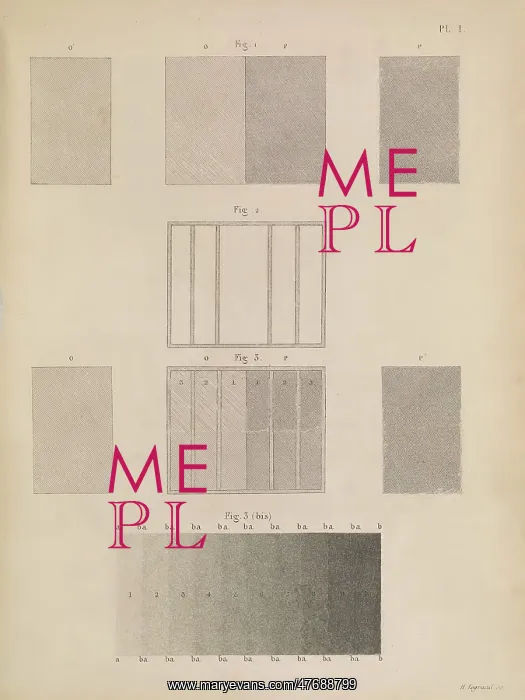
Michel Chevreul, Illusion of Color, 1839
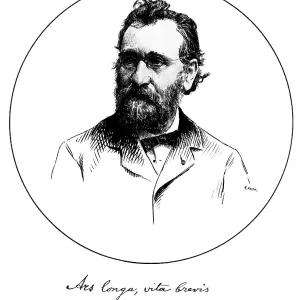
Chevreul illusion. Diagrams show how the brain exaggerates differences in color. When O (top left) and P (top right) are placed next to each (top center) O appears lighter and P appears darker. When many different shades are put next to each other (along bottom), this leads to the perception of more shades than are actually present. Michel EugC ne Chevreul (August 31 1786 - April 9, 1889) was a French chemist whose work with fatty acids led to early applications in the fields of art and science. He is credited with the discovery of margaric acid, creatine, and designing an early form of soap made from animal fats and salt. In 1813 Chevreul was appointed professor of chemistry at the Lyccee Charlemagne, and subsequently undertook the directorship of the Gobelins tapestry works, where he carried out his research on color contrasts. In 1839, he published the results under the title De la loi du contraste simultance des couleurs( The Principles of Harmony and Contrast of Colors). He lived to 102 and was a pioneer in the field of gerontology. He is also one of the 72 people whose names are inscribed on the Eiffel Tower
Pick your License
Restrictions Only for Ireland and United Kingdom
1839 Atlas Brightness Chevreul Classification Colors Combinations Contrast Contraste Couleurs Eugne Harmony Http Illusion Laws Optical Optics Perception Principles Simultaneous Theory
Features In These Collections
> Contributors > PHR