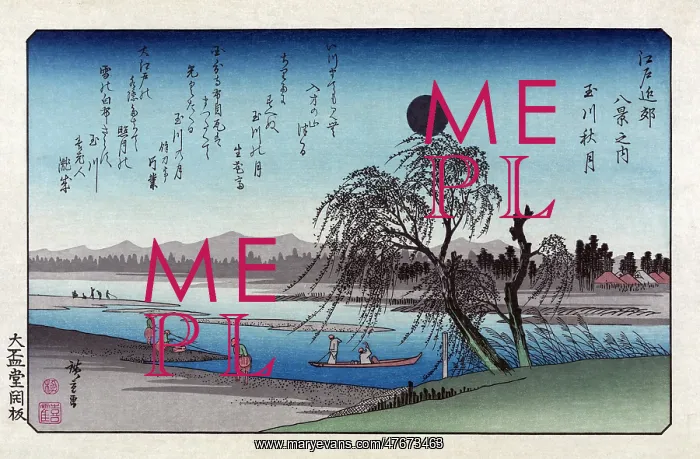
Full Moon Over Tama River, 1838
Tamagawa no shugetsu. Autumn moon over Tama River. People on shore and in boats fishing on the Tama River beneath a full moon. A black moon refers to an additional new moon that appears in a month or in a season. It may also refer to the absence of a full moon or of a new moon in a month. Since ancient times the Japanese have contemplated the combination of snow, flowers, moon, and the beauties of nature. And not only have they contemplated such scenes, they've also made them favored themes for paintings and poetry. The symbolic meaning of the moon is closely tied to the act of rejuvenation. Ukiyo-e (picture of the floating world) is a genre of Japanese art which flourished from the 17th through 19th centuries. Ukiyo-e was central to forming the West's perception of Japanese art in the late 19th century.The landscape genre has come to dominate Western perceptions of ukiyo-e, though ukiyo-e had a long history preceding these late-era masters. The Japanese landscape differed from the Western tradition in that it relied more heavily on imagination, composition, and atmosphere than on strict observance of nature. Utagawa Hiroshige, 1838
Pick your License
Restrictions Only for Ireland and United Kingdom
1838 Ando Astronomical Celestial Heavenly Hiroshige Lunar Moonlight Moonlit Rejuvenation Satellite Sphere Symbolical Symbolism Tams Ukiyo-e Utagawa Woodblock
Features In These Collections
> Contributors > PHR