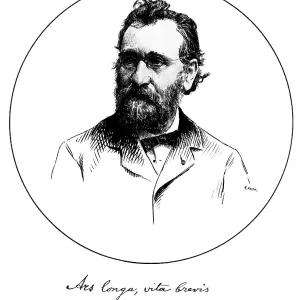

Oswald Avery, Canadian-American Medical Researcher
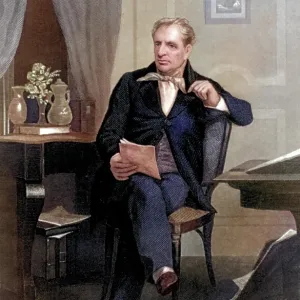
Oswald Theodore Avery (1877-1955) was a distinguished bacteriologist and research physician and one of the founders of immunochemistry. He is best known for his discovery that deoxyribonucleic acid (DNA) serves as genetic material. The work of Avery and the members of his team at the Rockefeller Institute, observed Nobel laureate Dr. Joshua Lederberg, was the historical platform of modern DNA research and betokened the molecular revolution in genetics and biomedical science generally. Avery's work came to the attention of Rufus Cole, the director of the Hospital of the Rockefeller Institute for Medical Research, through one of his papers on secondary infections in pulmonary tuberculosis. One of Cole's goals was to develop a therapeutic serum--like that which had been developed for diphtheria--for pneumonia, and to this end he asked Avery to join the Hospital's pneumonia research program. Avery moved to the Rockefeller Institute in 1913, where he focused most of his research for the next thirty-five years on a single species of pneumonia-creating bacteria, Diplococcus pneumoniae. There, he worked with scientists that were widely recognized as being among the elite in their fields, including Alphonse R. Dochez, Ren? Dubos, Harriett Ephrussi-Taylor, Michael Heidelberger, Rebecca Craighill Lancefield, Maclyn McCarty, and Colin MacLeod. His research career culminated in 1944, when, with McCarty and MacLeod, Avery published his seminal paper proving that the transforming principle, or hereditary material, was DNA and not protein as most scientists had assumed. In the early 1940s Avery and McCarty, a colleague at the Hospital, concentrated on the phenomenon of pneumococcal transformation, in which R-form (non-virulent) pneumococcus bacteria changed into the virulent S-form after killed S-form bacteria were added to the culture. The changed bacteria were identical in virulence and type to the killed bacteria, and the changes were permanent and inheritable. Utilizing refined versions of MacLeod's preparation techniques, Avery and McCarty soon isolated active transforming substance from samples of pneumococci, and found that the substance was deoxyribonucleic acid, or DNA. In 1944, Avery, MacLeod, and McCarty published their discovery in the Journal of Experimental Medicine. Their conclusions in this paper were cautious, and they presented several interpretations of their results. The phenomenon of transformation, they wrote, was interpreted from a genetic point of view. Yet they also gave another interpretation, that there might be an analogy between the activity of the transforming agent and that of a virus. They concluded that, Assuming that the sodium desoxyribonucleate and the active principle are one and the same substance, then the transformation described represents a change that is chemically induced and specifically directed by a known chemical compound. If the results of the present study on the chemical nature of the transforming principle are confirmed, then nucleic acids must be regarded as possessing biological specificity. Although some of their peers initially questioned this conclusion, in 1952, Alfred Hershey and Martha Chase proved DNA was the hereditary material through their work with a bacterial virus (phage). In 1953, James Watson and Francis Crick determined the double helix structure of DNA. Thus, Avery played an early and critical role in the molecular revolution in biology
Pick your License
Restrictions Only for Ireland and United Kingdom
1877 Avery Bacteria Bacteriologist Bacteriology Biology Canadian American Canadian-american Molecular Oswald Pneumococcus Researcher Transformation
Features In These Collections
> Contributors > PHR