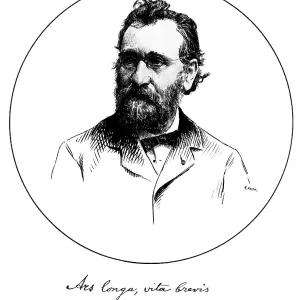

Owen Chamberlain, American Physicist
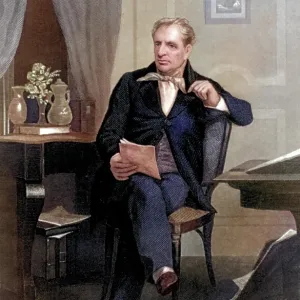
Owen Chamberlain (July 10, 1920 - February 28, 2006) was an American physicist. He studied physics at Dartmouth College, and at the University of California, Berkeley. He remained in school until the start of WWII, and joined the Manhattan Project in 1942, where he worked with Emilio Segr?, both at Berkeley and in Los Alamos, New Mexico. In 1946, after the war, he continued with his doctoral studies at the University of Chicago under legendary physicist Enrico Fermi. He returned to Berkeley as a member of its faculty, where he, Segr?, and other physicists investigated proton-proton scattering. In 1955, a series of proton scattering experiments led to the co-discovery of the anti-proton, a sub-atomic antiparticle, for which he and Segr?" were awarded the Nobel Prize in Physics in 1959. Chamberlain's later research work included the time projection chamber (TPC), and work at the Stanford Linear Accelerator Center (SLAC). In the 1980s, he helped found the nuclear freeze movement. In 2003 he was one of 22 Nobel Laureates who signed the Humanist Manifesto. Chamberlain was diagnosed with Parkinson's disease in 1985, and retired from teaching in 1989. He died of complications from the disease in 2006, at the age of 85
Pick your License
Restrictions Only for Ireland and United Kingdom
Particle Particles Physicists Prizes Scientists Sub-atomic
Features In These Collections
> Contributors > PHR