Pack Train, 20th Century
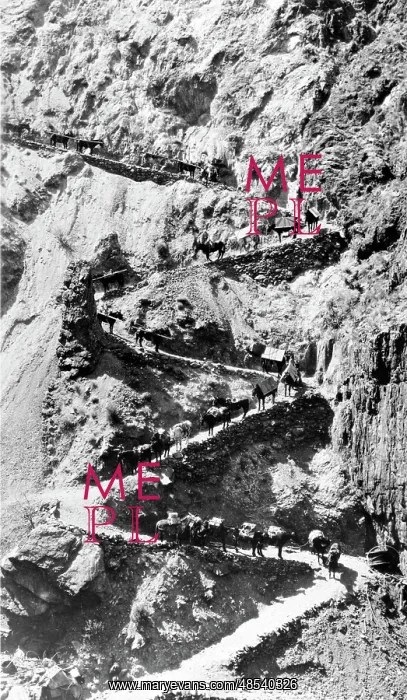
Entitled: Pack train waiting to be loadd at foot of Yaki Trail. Approximately 2 1/2 tons of steel on animals shown. Kaibab Trail Suspension Bridge, Spanning Colorado River, Grand Canyon, Coconino County, Arizona. Packhorses are used to cross difficult terrain, where the absence of roads prevents the use of wheeled vehicles. Use of packhorses dates from the neolithic period to the present day. The packhorse, mule or donkey was a critical tool in the development of the Americas. As the nation expanded west, packhorses, singly or in a pack train of several animals, were used by early surveyors and explorers, most notably by fur trappers, Mountain men, and gold prospectors who covered great distances by themselves or in small groups. Packhorses were used by Native American people when traveling from place to place, and were also used by traders to carry goods to both Indian and White settlements. During a few decades of the 19th Century, enormous pack trains carried goods on the Old Spanish Trail from Santa Fe, New Mexico west to California. On current United States Geological Survey maps, many such trails continue to be labeled pack trail. Historic American Engineering Record (HAER) collection, undated
Pick your License
Restrictions Only for Ireland and United Kingdom
Arizona Canyon Colorado Packhorses Suspension Symmetry Weaning Winding
Features In These Collections
> Contributors > PHR