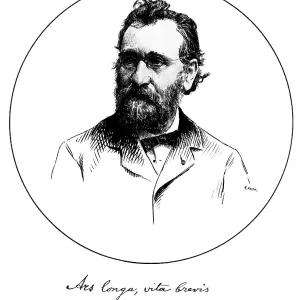
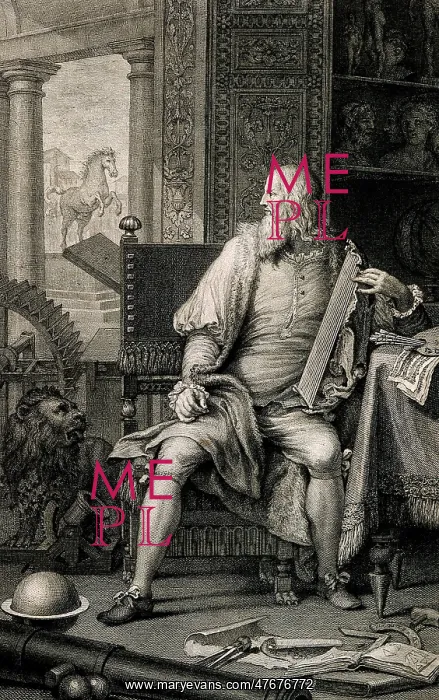
Portrait of Leonardo da Vinci from 1782
Leonardo da Vinci. Line engraving by D. Cunego, 1782, after C. Collani. Leonardo di ser Piero da Vinci (April 15, 1452 - May 2, 1519) was an Italian Renaissance polymath: painter, sculptor, architect, musician, mathematician, engineer, inventor, anatomist, geologist, cartographer, botanist, and writer. His genius, perhaps more than that of any other figure, epitomized the Renaissance humanist ideal, often been described as the archetype of the Renaissance Man. He is widely considered to be one of the greatest painters of all time and perhaps the most diversely talented person ever to have lived. He is also revered for his technological ingenuity. He conceptualized flying machines, an armored vehicle, concentrated solar power, an adding machine, and the double hull, also outlining a rudimentary theory of plate tectonics. Relatively few of his designs were constructed or were even feasible during his lifetime, but some of his smaller inventions, such as an automated bobbin winder and a machine for testing the tensile strength of wire, entered the world of manufacturing unheralded. He made important discoveries in anatomy, civil engineering, optics, and hydrodynamics, but he did not publish his findings and they had no direct influence on later science. He died in 1519 at the age of 67. In accordance with his will, sixty beggars followed his casket