Public Humiliation, Ducking Stool
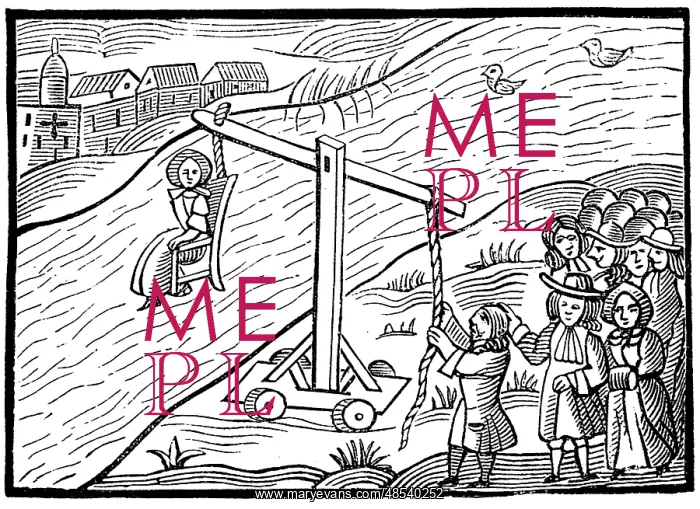
Cucking stools or ducking stools were chairs formerly used for punishment of disorderly women, scolds, and dishonest tradesmen. An instrument of public humiliation and censure. The ducking-stool was a strongly made wooden armchair in which the offender was seated, an iron band being placed around her so that she should not fall out during her immersion. The earliest record of the use of such is towards the beginning of the 17th century, with the term being first attested in English in 1597. Usually the chair was fastened to a long wooden beam fixed as a seesaw on the edge of a pond or river. Sometimes, however, the ducking-stool was not a fixture but was mounted on a pair of wooden wheels so that it could be wheeled through the streets, and at the river-edge was hung by a chain from the end of a beam. In sentencing a woman the magistrates ordered the number of duckings she should have. Another type of ducking-stool was called a tumbrel. It was a chair on two wheels with two long shafts fixed to the axles. This was pushed into the pond and then the shafts released, tipping the chair up backwards. Sometimes the punishment proved fatal and the victim died of shock
Pick your License
Restrictions Only for Ireland and United Kingdom
Cruel Cruelty Ducking Humiliation Infamous Inhumane Inhumanity Interrogate Interrogation Method Notorious Ordeal Persecute Persecuted Persecuting Persecution Punish Punishing Seventeeth Sixteenth Stool Suffering Torturer Torturing
Features In These Collections
> Contributors > PHR