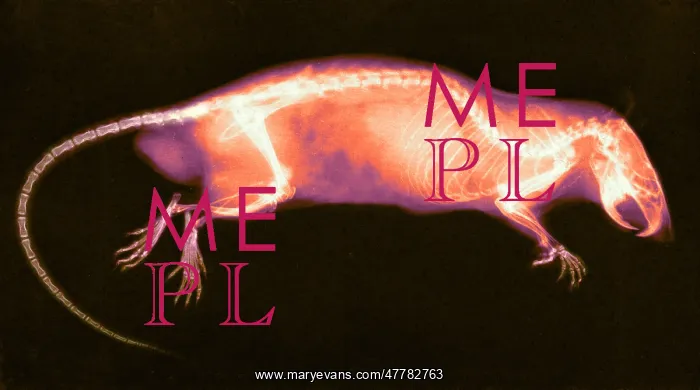
Rat, X-ray, 1896
Historical X-ray of a rat, 1896. Taken by Josef Maria Eder (Austrian, 1855-1944) and Eduard Valenta (Austrian, 1857-1937). Photogravure. Eder was the director of an institute for graphic processes and the author of an early history of photography. With the photochemist Valenta, he produced a portfolio in January 1896, less than a month after Wilhelm Conrad Rontgen published his discovery of X-rays. Eder and Valenta-s volume, from which this plate derives, demonstrated the X-ray-s magical ability to reveal the hidden structure of living things. Human hands and feet, fish, frogs, a snake, a chameleon, a lizard, a rat, and a newborn rabbit are all presented in exquisitely printed photo-gravures, as are carved cameos and an assortment of natural materials. In an era when photography-s ability to accurately depict the visible world had become commonplace, this newfound capacity to record the invisible opened up a host of possibilities, both scientific and aesthetic
Pick your License
Restrictions Only for Ireland and United Kingdom
Bones Eder Enhance Photogravure Radiograph Skeletal Valenta Vermin X-ray
Features In These Collections
> Contributors > PHR