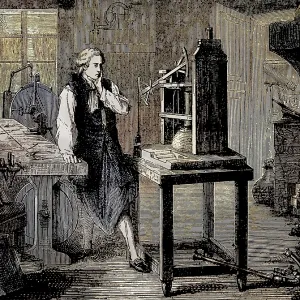


 : Recording Sound on Phonograph, 19th Century


Recording Sound on Phonograph, 19th Century

The phonograph is a device for the mechanical recording and reproduction of sound. In its later forms it is also called a gramophone. The phonograph was invented in 1877 by Thomas Edison. While other inventors had produced devices that could record sounds, Edison's phonograph was the first to be able to reproduce the recorded sound. His phonograph originally recorded sound onto a tinfoil sheet wrapped around a rotating cylinder. A stylus responding to sound vibrations produced an up and down or hill-and-dale groove in the foil. Edison is the fourth most prolific inventor in history, holding 1, 093 US patents in his name. He is credited with numerous inventions that contributed to mass communication and telecommunications; stock ticker, mechanical vote recorder, attery for an electric car, electrical power, recorded music and motion pictures. He died of complications of diabetes on October 18, 1931, in his home. The phonograph is said to have been his favorite invention. This image has been color enhanced

Picture No
13346526
Media ID
47785010
Size
4200px x 3398px (2.0MB)
Credit
© Science Source / Mary Evans Picture Library
Usage Restrictions
Commercial sales may require 3rd party clearance
Source
Science Source

Pick your License

Please tell us the book title or ISBN

Please supply intended use


Restrictions Only for Ireland and United Kingdom

Enhancement Figuier Gramophone Grandes Inventions Phonograph Reproducing


Features In These Collections

> Contributors > PHR
Gallery Wall Inspiration

Ilya Ilyich Mechnikov, Russian Immunologist
Laughing Gas, Nitrous Oxide
James Watt, Scottish Inventor and Engineer
Asteriornis ancient bird, illustration
Hesperornis ancient bird, illustration
Icthyornis ancient bird, illustration
Confuciusornis sanctus ancient bird, illustration
Deinonychus ancient bird art, illustration
Laughing Gas, Nitrous Oxide
Thames Water Drop, 1850
Michael Faraday and Father Thames, 1855
Thames Water Drop, 1850
Michael Faraday and Father Thames, 1855
Cellular Plant Tissue, Matthias Jakob Schleiden, 1847
Henry Maudsley, British Psychiatrist
Swimming Manual, Digby, 1587
Russian Pirates, 1805
Ilya Ilyich Mechnikov, Russian Immunologist
Johnny Appleseed, American Nurseryman
Saint Paul, Christian Apostle
James Fenimore Cooper, American Author
Arthrobotrys, SEM
Rhizopus sexualis, SEM
Flint Hatchet, Stone Age Tool


© Copyright Mary Evans Picture Library - All Rights Reserved 2026
Powered by Media Storehouse®
We accept all major payment options so you can pay for the things you need in the way that is most convenient for you
Facebook     Twitter     Instagram