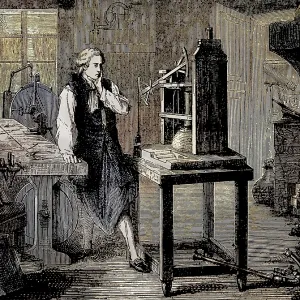
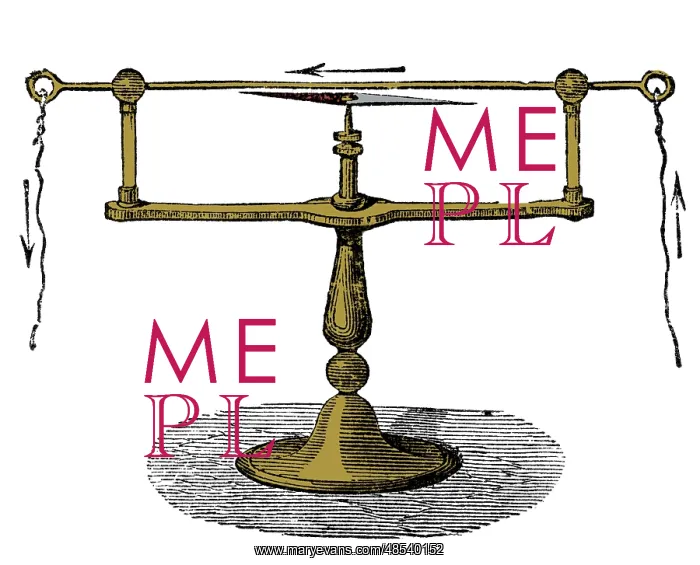
?rsted Magnetic Needle, Electromagnetism, 1820
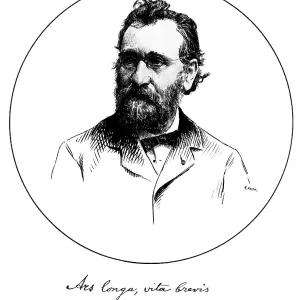
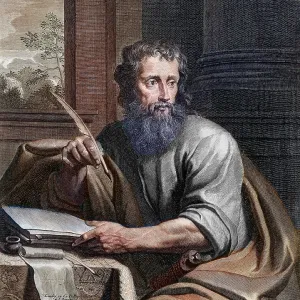
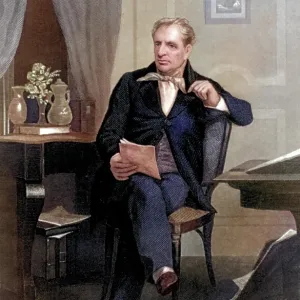
Deviation of the magnetic needle by current of battery. Hans Christian C?rsted (August 14, 1777 - March 9, 1851) was a Danish physicist and chemist who discovered that electric currents create magnetic fields, an important aspect of electromagnetism. In 1820 C?rsted noticed a compass needle deflected from magnetic north when an electric current from a battery was switched on and off, showing a relationship between electricity and magnetism. His initial interpretation was that magnetic effects radiate from all sides of a wire carrying an electric current, as do light and heat. He began more intensive investigations and published his findings, showing that an electric current produces a circular magnetic field as it flows through a wire. In 1825, C?rsted made a significant contribution to chemistry by producing aluminium for the first time isolating the element via a reduction of aluminium chloride. The unit of magnetic induction (oersted) is named for him. He died in 1851 at the age of 73
Pick your License
Restrictions Only for Ireland and United Kingdom
Colorised Colorization Compass Current Electro-magnetism Electromagnetism Enhancement Figuier Grandes Inventions Magnetic Magnetism Needle Oersted Rsted
Features In These Collections
> Contributors > PHR