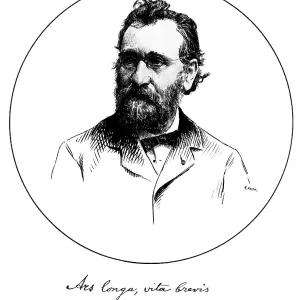

Salvador Edward Luria, Italian Microbiologist
Salvador Edward Luria (1912-1991) was an Italian-born bacteriologist whose pioneering work on bacterial viruses (bacteriophage) with Max Delbr?ck demonstrated that bacterial resistance to phage infection occurred through genetic mutation, and that bacteria were suitable subjects for genetics research. He was a founding member of the informal phage group of early molecular biologists working on problems of gene structure and function. His subsequent work included discovering the phenomenon of bacterial restriction and modification of phage DNA by means of enzymes, and elucidating the mechanisms by which certain proteins operate within bacterial cell membranes. Later, Luria was the first director of the MIT Center for Cancer Research. He was also well-known for his political activism, especially in protesting the Vietnam War. Luria shared the 1969 Nobel Prize in Physiology or Medicine with Max Delbr?ck and Alfred Hershey, for their discoveries concerning the replication mechanism and the genetic structure of viruses
Pick your License
Restrictions Only for Ireland and United Kingdom
Bacterial Bacteriologist Bacteriology Biologist Biology Cancer Hershey Laureate Luria Mechanism Microbiologist Microbiology Molecular Replication Restriction Salvador Viruses
Features In These Collections
> Contributors > PHR