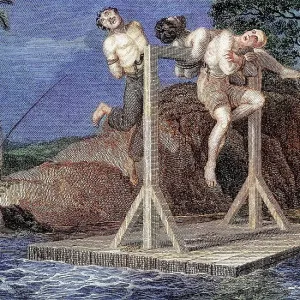
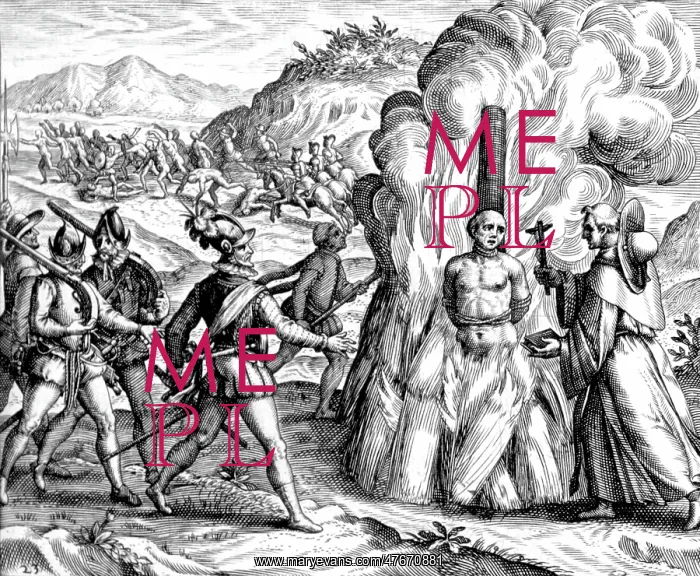
Spanish Persecution, Hatuey Burned at Stake, 16th Century
Hatuey was a Taino chief from the island of Hispaniola, who fled to Cuba during the Spanish conquest. According to Bartolome de las Casas Hatuey entreated the Taino of Caobana people to join him. He showed them a basket of gold and jewels, saying: Here is the God the Spaniards worship. For these they fight and kill for these they persecute us and that is why we have to throw them into the sea. The Taino chiefs in Cuba did not respond to Hatuey's message, and few joined him to fight. Hatuey resorted to guerrilla tactics against the Spaniards, and was able to confine them for a time. Eventually, using mastiffs and torturing the Native people for information, the Spaniards succeeded in capturing him. On February 2, 1512, he was tied to a stake and burned alive. Before he was burned, a priest asked Hatuey if he would accept Jesus and go to heaven. Hatuey asked the priest if Spaniards went to heaven. The priest answered yes. Hatuey said that he did not want to go there but to hell so as not to be where they were and where he would not see such cruel people. In 1552, the Dominican friar Bartolome de las Casas published the BrevCisima relaciCun de la destrucciCun de las Indias (A Short Account of the Destruction of the Indies), an account of atrocities committed by landowners and officials during the colonization of New Spain. Engravings appeared in Narratio regionum Indicarum per Hispanos quosdam deuastatarum verissima by Theodore de Bry in 1598
Pick your License
Restrictions Only for Ireland and United Kingdom
1512 Abuse Amerindians Atrocities Atrocity Barbaric Bartolome Burned Casas Cruel Cruelty Infamous Inhumane Inhumanity Notorious Persecute Persecuted Persecuting Persecution Punish Punishing Sixteenth Stake Taino Theodor Theodorus
Features In These Collections
> Contributors > PHR