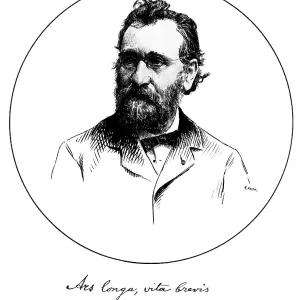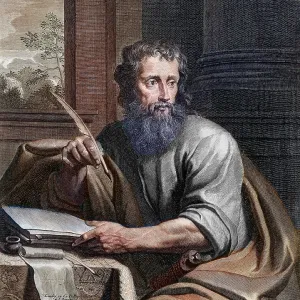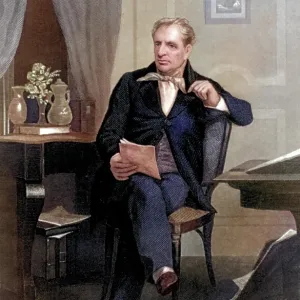
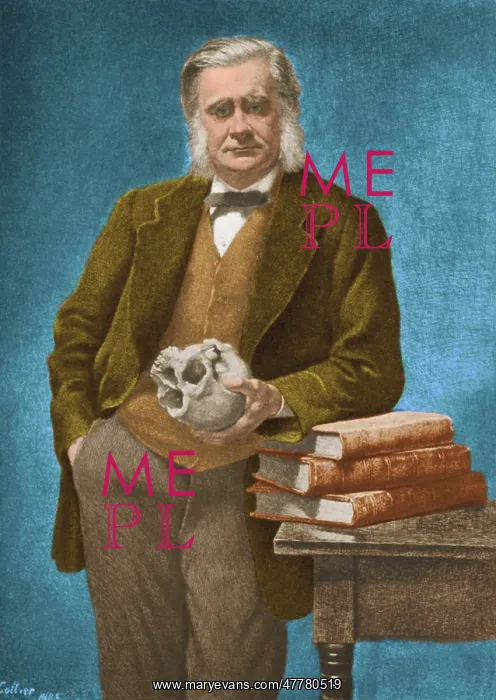
Thomas Huxley, English Biologist
Thomas Henry Huxley (May 4, 1825 - June 29, 1895) was an English biologist, known as Darwin's Bulldog for his advocacy of Charles Darwin's theory of evolution. Huxley's famous 1860 debate with Samuel Wilberforce was a key moment in the wider acceptance of evolution, and in his own career. Huxley was slow to accept some of Darwin's ideas, such as gradualism, and was undecided about natural selection, but despite this he was wholehearted in his public support of Darwin. He was instrumental in developing scientific education in Britain, and fought against the more extreme versions of religious tradition. Huxley coined the term agnostic to describe his own views on theology, a term whose use has continued to the present day. Huxley had little formal schooling and was virtually self-taught. The Royal Society, who had elected him as Fellow when he was 25 (1851), awarded him the Royal Medal the next year. He was the youngest biologist to receive such recognition. Huxley retired in 1885, after a bout of depressive illness which started in 1884. He died in 1895 at the age of 70
Pick your License
Restrictions Only for Ireland and United Kingdom
Anatomist Biologist Comparative Darwinist Huxley Seolink-scientists-01-2020 Theology Zoologist
Features In These Collections
> Contributors > PHR