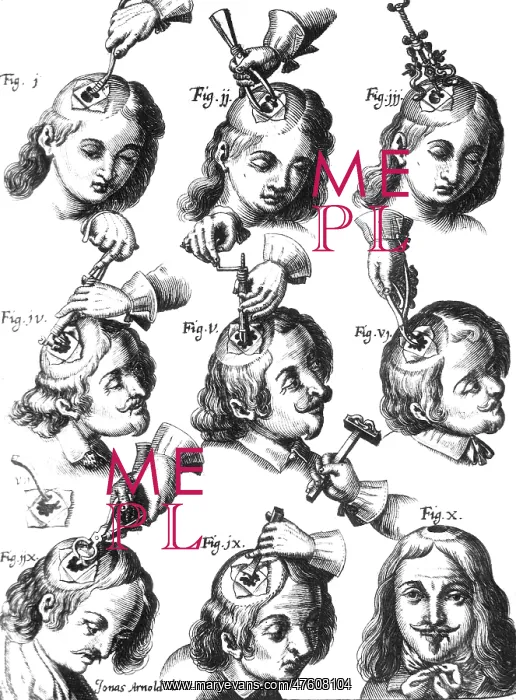
Trepanning, 1666
Engraving, 1666. Nine scenes demonstrating trephining procedures and the instruments used. Trepanning is a surgical intervention in which a hole is drilled or scraped into the human skull, exposing the dura mater to treat health problems related to intracranial diseases. Cave paintings indicate that people believed the practice would cure epileptic seizures, migraines, mental disorders and the bone that was trepanned was kept as a charm to keep evil spirits away. Trepanation was also practiced in the classical and Renaissance periods. Hippocrates gave specific directions on the procedure from its evolution through the Greek age, and Galen also elaborates on the procedure. During the Middle Ages and the Renaissance, trepanation was practiced as a cure for various ailments, including seizures and skull fractures
Pick your License
Restrictions Only for Ireland and United Kingdom
1666 Burr Cranial Cranium Diseases Drilling Intervention Intracranial Procedure Surgery Surgical Treat Trepanning Trephaning Trephination Trephine Trephining
Features In These Collections
> Contributors > PHR