Trinity TNT Test, Manhattan Project
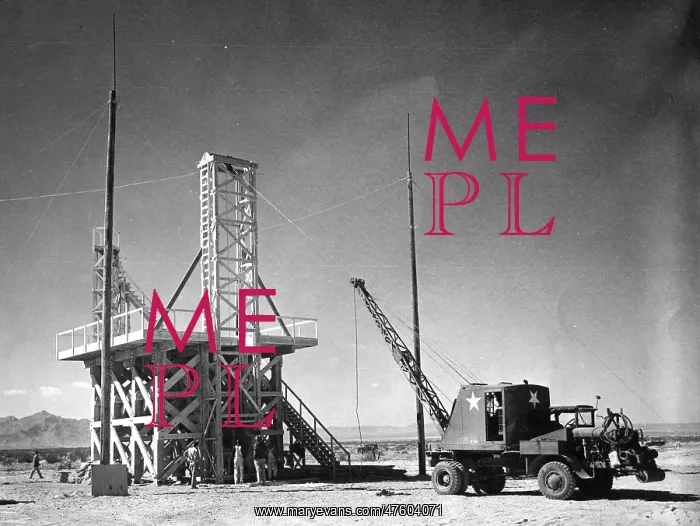
TNT Test Trinity. The Manhattan Project was a research and development program by the United States with the United Kingdom and Canada that produced the first atomic bomb during World War II. From 1942 to 1946, the project was under the direction of Major General Leslie Groves of the US Army Corps of Engineers. In March 1944, planning for the test was assigned to Kenneth Bainbridge, a professor of physics at Harvard, working under Kistiakowsky. Because of the complexity of an implosion-style weapon, it was decided that, despite the waste of fissile material, an initial test would be required. Groves approved the test, subject to the active material being recovered. Consideration was therefore given to a controlled fizzle, but Oppenheimer opted instead for a full-scale nuclear test, codenamed Trinity. Bainbridge selected the bombing range near Alamogordo Army Airfield as the site for the test. Beginning in October 1944, the Jornada del Muerto became the site of ever increasing activity as Trinity Site was prepared for the test. A base camp was built to house staff. A one-hundred foot shot tower was designed and constructed at ground zero. Concrete bunkers to house cameras and other diagnostic equipment popped up in a rough circle around ground zero. Many of these bunkers were given names pegged to their proximity to the shot tower, such as North 10, 000. In March 1945, a July date was set for the Trinity test. However the actual day, July 16th, was not selected until the end of June, when the last of the technical issues had been addressed. In addition, a commitment had been made to test the gadget as soon after July 15th as possible, and before or during the upcoming Potsdam Conference
Pick your License
Restrictions Only for Ireland and United Kingdom
A Bomb A-bomb Alamogordo Atom Atomic Remote Trinity
Features In These Collections
> Contributors > PHR