

 : Uroscopy, 15th Century


Uroscopy, 15th Century

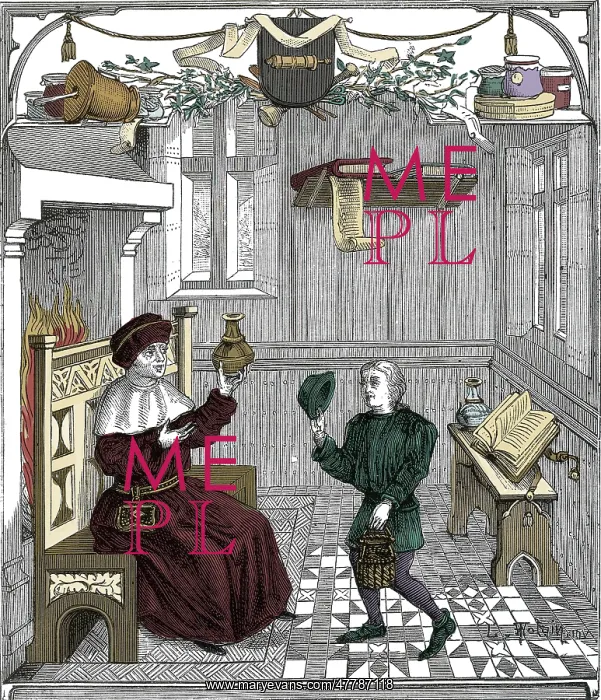
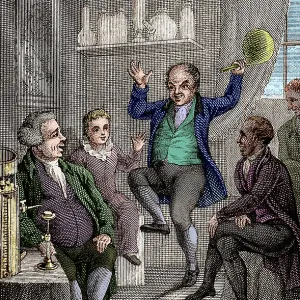
Uroscopy allowed doctors to diagnose patients without technology. All that was needed was a uroscopy wheel, uroscopy flask, and an experienced doctor to be able to give a diagnosis. It was a very simple procedure that a doctor could determine a patients problem by simply tasting and/or looking at their urine. In medieval medicine, uroscopy was an important diagnostic tool, urine having 29 attributes to be observed. From this the physician deduced the supposed levels of a patient's four humors (bodily fluids): blood, yellow bile, black bile and phlegm. Illness was thought to be due to an imbalance in these fluids. By modern medical standards, uroscopy is considered to be a very limited means of obtaining evidence for the correct diagnosis of a patient's condition. Many of the assumptions made by ancient physicians regarding uroscopy have proved to be quite incorrect and unscientific. No artist credited, dated 15th century. This image has been color enhanced
Picture No
13345193
Media ID
47787118
Size
3479px x 4050px (5.1MB)
Credit
© Science Source / Mary Evans Picture Library
Usage Restrictions
Commercial sales may require 3rd party clearance
Source
Science Source

Pick your License

Please tell us the book title or ISBN

Please supply intended use


Restrictions Only for Ireland and United Kingdom

Analysis Diagnosis Flask Urine Uroscopy


Features In These Collections

> Contributors > PHR

Gallery Wall Inspiration

Ilya Ilyich Mechnikov, Russian Immunologist
Laughing Gas, Nitrous Oxide
James Watt, Scottish Inventor and Engineer
Asteriornis ancient bird, illustration
Hesperornis ancient bird, illustration
Icthyornis ancient bird, illustration
Confuciusornis sanctus ancient bird, illustration
Deinonychus ancient bird art, illustration
Laughing Gas, Nitrous Oxide
Thames Water Drop, 1850
Michael Faraday and Father Thames, 1855
Thames Water Drop, 1850
Michael Faraday and Father Thames, 1855
Cellular Plant Tissue, Matthias Jakob Schleiden, 1847
Henry Maudsley, British Psychiatrist
Swimming Manual, Digby, 1587
Russian Pirates, 1805
Ilya Ilyich Mechnikov, Russian Immunologist
Johnny Appleseed, American Nurseryman
Saint Paul, Christian Apostle
James Fenimore Cooper, American Author
Arthrobotrys, SEM
Rhizopus sexualis, SEM
Flint Hatchet, Stone Age Tool


© Copyright Mary Evans Picture Library - All Rights Reserved 2026
Powered by Media Storehouse®
We accept all major payment options so you can pay for the things you need in the way that is most convenient for you
Facebook     Twitter     Instagram