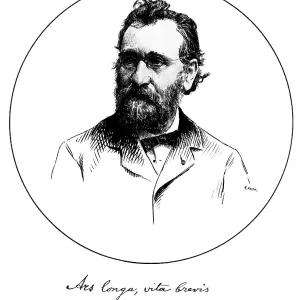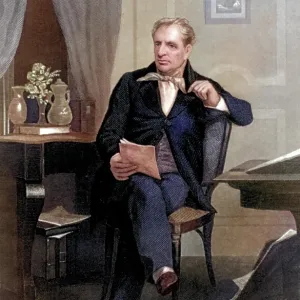
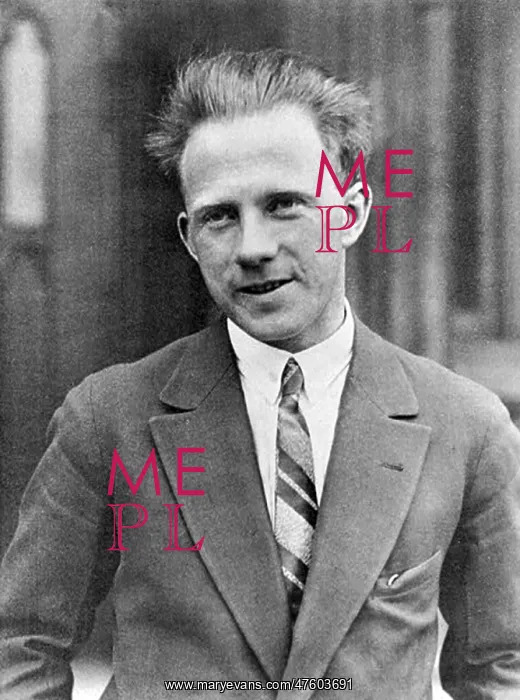
Werner Heisenberg, German Theoretical Physicist
Werner Karl Heisenberg (December 5, 1901 - February 1, 1976) was a German theoretical physicist who was awarded the Nobel Prize for Physics for the creation of quantum mechanics in 1932. In 1925, Heisenberg, along with Max Born and Pascual Jordan, set forth the matrix formulation of quantum mechanics. In 1927 he published his uncertainty principle, which is now one of the central principles of modern physics. He also made important contributions to the theories of the hydrodynamics of turbulent flows, the atomic nucleus, ferromagnetism, cosmic rays, and subatomic particles, and he was instrumental in planning the first West German nuclear reactor. Considerable controversy surrounds his work on atomic research during World War II. Heisenberg died of cancer of the kidneys and gall bladder in 1976. He was 74 years old
Pick your License
Restrictions Only for Ireland and United Kingdom
Controversial Heisenberg Laureate Matrix Mechanics Nobelist Principle Quantum Recipient Theoretical Theory Uncertainty
Features In These Collections
> Contributors > PHR