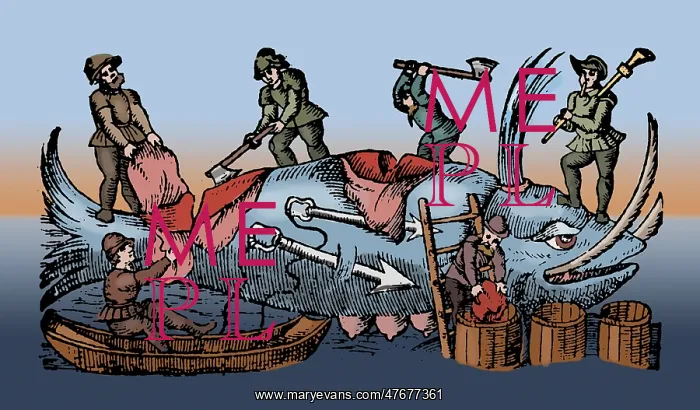
Whaling, 16th Century
Woodcut of a whale from Des Monstres et prodiges by Ambroise Pare, 1573. Des Monstres is filled with unsubstantiated accounts of sea devils, marine sows, and monstrous animals with human faces. With its extensive discussion of reproduction and illustrations of birth defects, the book invited accusations of pornography. Whaling is the hunting of whales primarily for meat and oil. Its earliest forms date to at least 3000 BC. Various coastal communities have long histories of subsistence whaling and harvesting beached whales. Industrial whaling emerged with organized fleets in the 17th century; competitive national whaling industries in the 18th and 19th centuries; and the introduction of factory ships along with the concept of whale harvesting in the first half of the 20th century. As technology increased and demand for the resources remained, catches far exceeded the sustainable limit for whale stocks. In the late 1930s, more than 50, 000 whales were killed annually and by the middle of the century whale stocks were not being replenished. In 1986, the International Whaling Commission (IWC) banned commercial whaling so that stocks might recover
Pick your License
Restrictions Only for Ireland and United Kingdom
1573 Ambroise Blubber Butchering Carcass Dwelling Enhancement Fishery Flensing Harvesting Imaginary Marvels Monsters Monstres Para Processing Prodiges Prodigies Sixteenth Slaughter Whale Whalers Whaling Woodblock
Features In These Collections
> Contributors > PHR