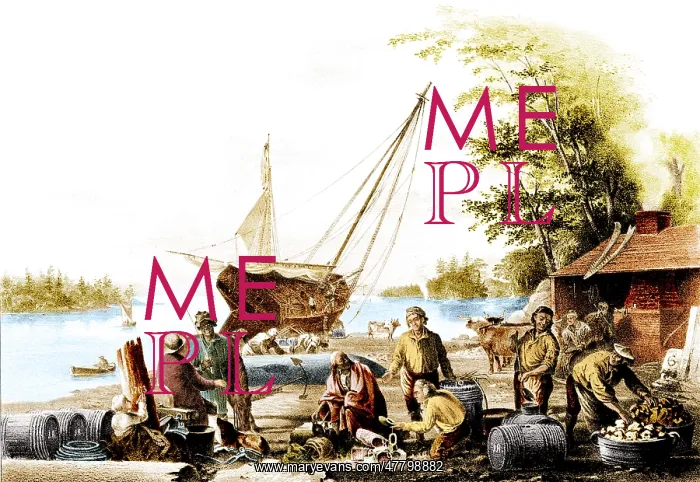


 : Whaling, 18th Century


Whaling, 18th Century

Whaling is the hunting of whales primarily for meat and oil. Its earliest forms date to at least 3000 BC. Various coastal communities have long histories of subsistence whaling and harvesting beached whales. Industrial whaling emerged with organized fleets in the 17th century; competitive national whaling industries in the 18th and 19th centuries; and the introduction of factory ships along with the concept of whale harvesting in the first half of the 20th century. As technology increased and demand for the resources remained, catches far exceeded the sustainable limit for whale stocks. In the late 1930s, more than 50, 000 whales were killed annually and by the middle of the century whale stocks were not being replenished. In 1986, the International Whaling Commission (IWC) banned commercial whaling so that stocks might recover. The Marine Mammals of the North-western Coast of North America, described and illustrated; together with an account of the American whale-fishery by Charles Melville Scammon, 1874
Picture No
13344742
Media ID
47798882
Size
4200px x 2892px (3.8MB)
Credit
© Biodiversity Heritage Library / Science Source / Mary Evans Picture Library
Usage Restrictions
Commercial sales may require 3rd party clearance
Source
Biodiversity Heritage Library

Pick your License

Please tell us the book title or ISBN

Please supply intended use


Restrictions Only for Ireland and United Kingdom

Enhance Fabled Fishery Serpent Whale Whalers Whaling


Features In These Collections

> Contributors > PHR

Gallery Wall Inspiration

Ilya Ilyich Mechnikov, Russian Immunologist
Laughing Gas, Nitrous Oxide
James Watt, Scottish Inventor and Engineer
Asteriornis ancient bird, illustration
Hesperornis ancient bird, illustration
Icthyornis ancient bird, illustration
Confuciusornis sanctus ancient bird, illustration
Deinonychus ancient bird art, illustration
Laughing Gas, Nitrous Oxide
Thames Water Drop, 1850
Michael Faraday and Father Thames, 1855
Thames Water Drop, 1850
Michael Faraday and Father Thames, 1855
Cellular Plant Tissue, Matthias Jakob Schleiden, 1847
Henry Maudsley, British Psychiatrist
Swimming Manual, Digby, 1587
Russian Pirates, 1805
Ilya Ilyich Mechnikov, Russian Immunologist
Johnny Appleseed, American Nurseryman
Saint Paul, Christian Apostle
James Fenimore Cooper, American Author
Arthrobotrys, SEM
Rhizopus sexualis, SEM
Flint Hatchet, Stone Age Tool


© Copyright Mary Evans Picture Library - All Rights Reserved 2026
Powered by Media Storehouse®
We accept all major payment options so you can pay for the things you need in the way that is most convenient for you
Facebook     Twitter     Instagram