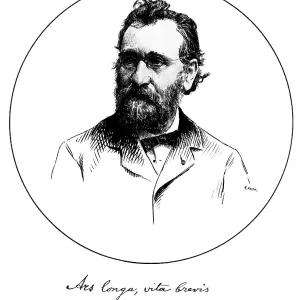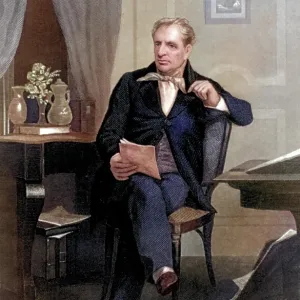

Wilhelm Roentgen, German Physicist
Wilhelm Konrad Roentgen (1845-1923), German experimental physicist and discoverer of X-rays. While using a discharge tube (in which an electric discharge is passed through a gas at low pressure) in a darkened room, Roentgen noticed that a card coated with barium platinocyanide glowed when the tube was switched on. The effect was not blocked by an intervening wall, or even a thin sheet of metal. Roentgen termed this newly discovered phenomenon X-ray radiation, and suggested that it consisted of electromagnetic rays with a shorter wavelength than light. He was awarded the first Nobel Prize for Physics in 1901
Pick your License
Restrictions Only for Ireland and United Kingdom
Barium Detected Detection Discovered Electromagnetic Enhancement Konrad Laureate Nobelist Platinocyanide Radiation Rays Recipient Roentgen Rontgen Wavelength Wurzburg X Ray X-ray Xray
Features In These Collections
> Contributors > PHR