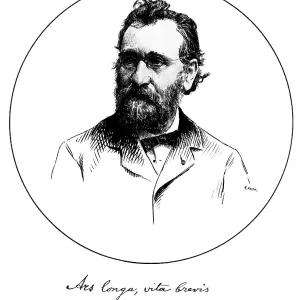
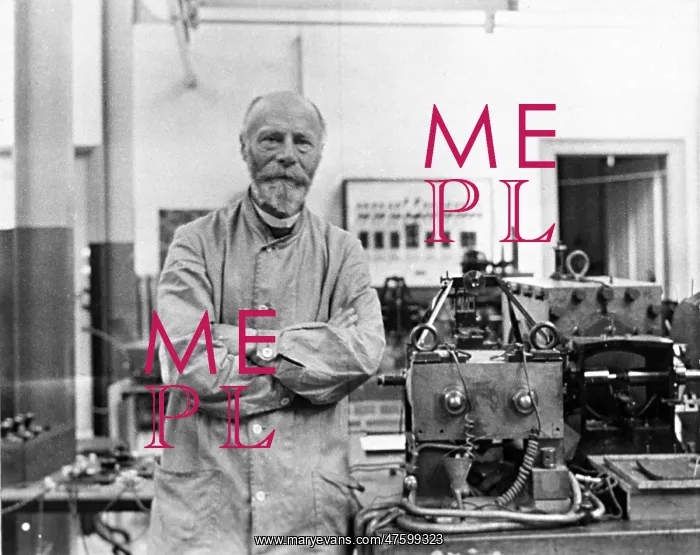
Willem Einthoven, Dutch Physiologist and Inventor
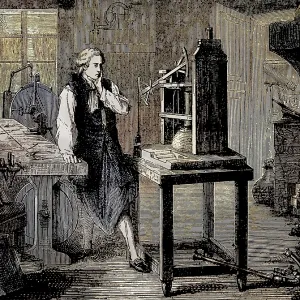
Einthoven standing beside his original string galvanometer in laboratory. Willem Einthoven (1860-1927) was a Dutch doctor and physiologist. He invented the first practical electrocardiogram (ECG or EKG) in 1903 and received the Nobel Prize in Medicine in 1924 for it. In 1901, Einthoven completed a series of prototypes of a string galvanometer. This device used a very thin filament of conductive wire passing between very strong electromagnets. When a current passed through the filament, the electromagnetic field would cause the string to move. A light shining on the string would cast a shadow on a moving roll of photographic paper, forming a continuous curve showing the movement of the string. His assignment of the letters P, Q, R,s and T to the various deflections is still used. The term Einthoven's triangle is named for him. It refers to the imaginary inverted equilateral triangle centered on the chest and the points being the standard leads on the arms and leg. After his development of the string galvanometer, Einthoven went on to describe the electrocardiographic features of a number of cardiovascular disorders
Pick your License
Restrictions Only for Ireland and United Kingdom
Cardiac Cardiovascular Diagnostic Disorders Einthoven Electrocardiogram Exam Examination Galvanometer Imaging Invasive Laureate Nobelist Non Invasive Non-invasive Physiologist Physiology Recipient String
Features In These Collections
> Contributors > PHR