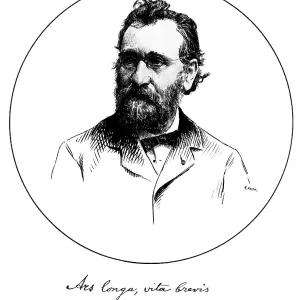
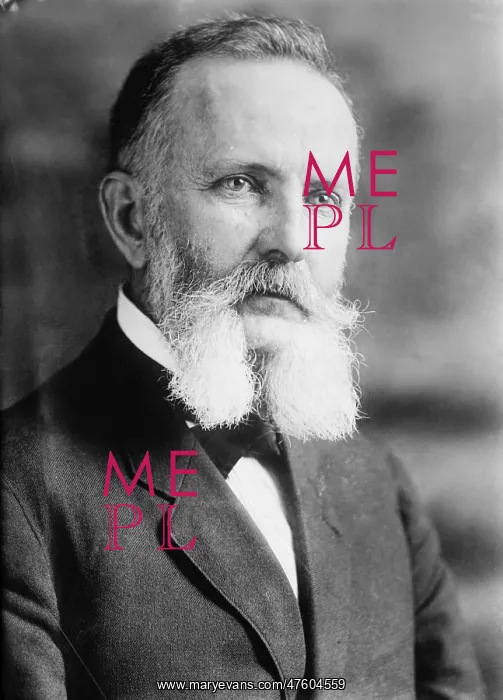
William Hillebrand, American Chemist
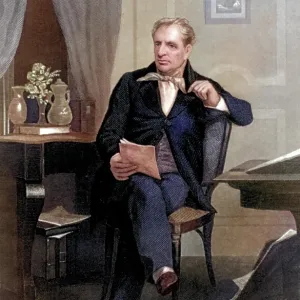
William Francis Hillebrand (December 12, 1853 - February 7, 1925) was an American chemist and the son of the renowned botanist William Hillebrand. He studied geochemistry and metallurgy at the Freiberg Mining Academy in Germany. In 1880 he started working as a chemist at the United States Geological Survey and he was sent to Denver to establish a chemical laboratory for the Rocky Mountain Division of the Survey. In 1885 he was transferred to the chief laboratory in Washington and eventually became. chief chemist at the National Bureau of Standards in 1909. During an analysis of the uranium containing mineral uranite he discovered that a gas evolved. He identified this gas by spectroscopic methods to be nitrogen. In 1895 William Ramsay did similar experiments with uranium containing minerals and discovered by similar methods that the gas was a mixture of argon and helium which until then had only been detected in the corona of stars. He died in 1925 at the age of 71
Pick your License
Restrictions Only for Ireland and United Kingdom
Analytical Chemical Chemistry Hillebrand
Features In These Collections
> Contributors > PHR