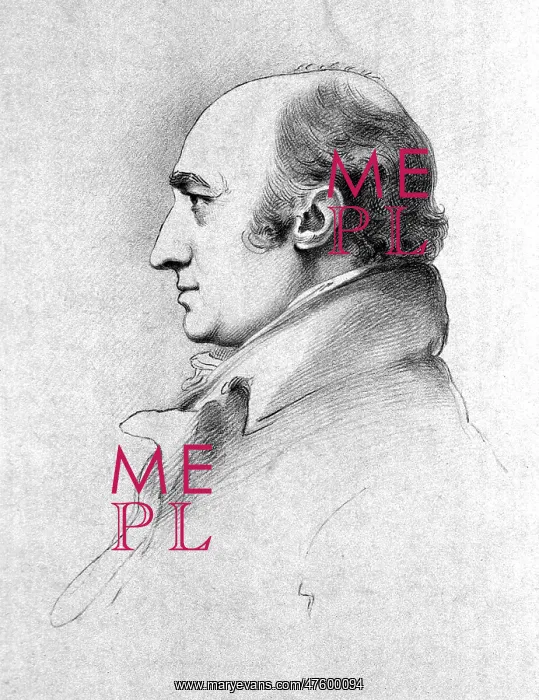
William Hyde Wollaston, English Chemist and Physicist
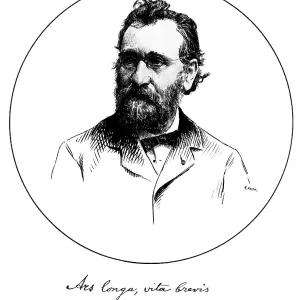
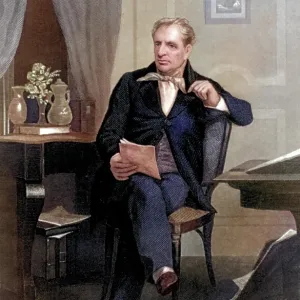
William Hyde Wollaston (1766-1828) was an English chemist and physicist. In 1793 William obtained a doctorate in medicine from Cambridge University and was a fellow of his college from 1787 to 1828. During his studies he became interested in chemistry, crystallography, metallurgy and physics. The mineral wollastonite is named after him. Wollaston became wealthy by developing the first physicochemical method for processing platinum ore in practical quantities, and in the process of testing the device he discovered the elements palladium and rhodium in 1803. His optical work was important as well, where he is remembered for his observations of dark Fraunhofer lines in the solar spectrum (1802) which eventually led to the discovery of the elements in the Sun. He invented the camera lucida (1807), the reflecting goniometer (1809), and the Wollaston prism. He also developed the first lens specifically for camera lens called Wollaston's meniscus lens, designed to improve the image projected by the camera obscura. He died in 1828 at the age of 62
Pick your License
Restrictions Only for Ireland and United Kingdom
1766 1803 1807 1809 1828 Chemistry Discovered Element Fraunhofer Goniometer Invented Lens Lucida Method Palladium Platinum Prism Processing Reflecting Rhodium Wollaston
Features In These Collections
> Contributors > PHR