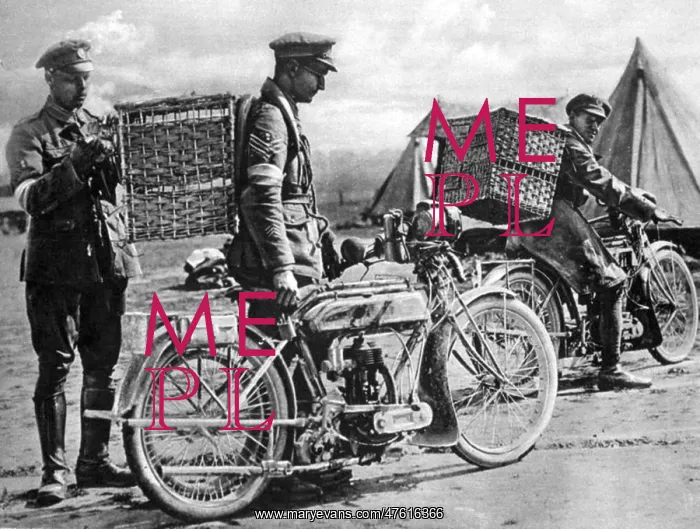
WWI, BEF Transporting Carrier Pigeons
British motorcyclists transporting carrier pigeons to the front, Motorcycles began to replace the horse as a method of delivering messages, both in battle and on the home front, and WWI was the first war in which the motorcycle was used for combat service. A carrier pigeon is a homing pigeon (domesticated rock pigeon, Columba livia) that is used to carry messages. Before the advent of radio, carrier pigeons were frequently used on the battlefield as a means for a mobile force to communicate with a stationary headquarters. Historically, pigeons carried messages only one way, to their home. They had to be transported manually before another flight. However, by placing their food at one location and their home at another location, pigeons have been trained to fly back and forth up to twice a day reliably, covering round-trip flights up to 100 miles. During WWI, carrier pigeons were used to transport messages back to their home coop behind the lines. When they landed, wires in the coop would sound a bell or buzzer and a soldier of the Signal Corps would know a message had arrived. He would go to the coop, remove the message from the canister, and send it to its destination by telegraph, field phone, or personal messenger. A carrier pigeon's job was dangerous. Nearby enemy soldiers often tried to shoot down pigeons, knowing that released birds were carrying important messages. Using pigeons to carry messages is generally called, pigeon post
Pick your License
Restrictions Only for Ireland and United Kingdom
Domesticated Expeditionary Homing Messenger Pigeon Transporting
Features In These Collections
> Contributors > PHR