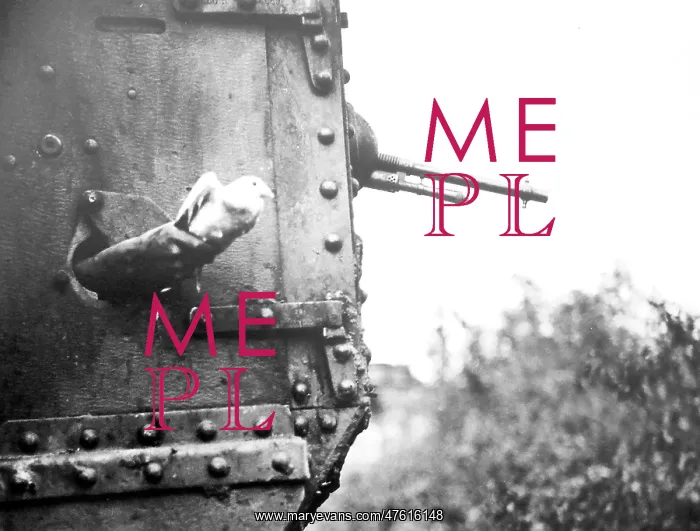


 : WWI, British Carrier Pigeon


WWI, British Carrier Pigeon

"Homing pigeons were used extensively during WWI. Carrier pigeons were trained to transport messages back to their home coop behind the lines. When they landed, wires in the coop would sound a bell or buzzer and a soldier would know a message had arrived. He would retrieve the message from the canister, and send it to its destination by telegraph, field phone, or personal messenger. In 1914 during the First Battle of the Marne, the French army advanced 72 pigeon lofts with the troops. The US Army Signal Corps used 600 pigeons in France alone. One of their homing pigeons, a Blue Check hen named Cher Ami, was awarded the Croix de Guerre with Palm for heroic service delivering 12 important messages during the Battle of Verdun. On her final mission in October 1918, she delivered a message despite having been shot. The crucial message, found in the capsule hanging from a ligament of her shattered leg, saved about 200 US soldiers of the 77th Infantry Division's "Lost Battalion"."

Picture No
10978403
Media ID
47616148
Size
4200px x 3188px (1.5MB)
Credit
© Photo Researchers / Mary Evans~~
Source
Photo Researchers

Pick your License

Please tell us the book title or ISBN

Please supply intended use


Restrictions Only for Ireland and United Kingdom

Deliver Delivering Domesticated Homer Homing Message Messenger Munitions Pigeon Trained Vital Weaponry


Features In These Collections

> Contributors > PHR
Gallery Wall Inspiration

Ilya Ilyich Mechnikov, Russian Immunologist
Laughing Gas, Nitrous Oxide
James Watt, Scottish Inventor and Engineer
Asteriornis ancient bird, illustration
Hesperornis ancient bird, illustration
Icthyornis ancient bird, illustration
Confuciusornis sanctus ancient bird, illustration
Deinonychus ancient bird art, illustration
Laughing Gas, Nitrous Oxide
Thames Water Drop, 1850
Michael Faraday and Father Thames, 1855
Thames Water Drop, 1850
Michael Faraday and Father Thames, 1855
Cellular Plant Tissue, Matthias Jakob Schleiden, 1847
Henry Maudsley, British Psychiatrist
Swimming Manual, Digby, 1587
Russian Pirates, 1805
Ilya Ilyich Mechnikov, Russian Immunologist
Johnny Appleseed, American Nurseryman
Saint Paul, Christian Apostle
James Fenimore Cooper, American Author
Arthrobotrys, SEM
Rhizopus sexualis, SEM
Flint Hatchet, Stone Age Tool


© Copyright Mary Evans Picture Library - All Rights Reserved 2026
Powered by Media Storehouse®
We accept all major payment options so you can pay for the things you need in the way that is most convenient for you
Facebook     Twitter     Instagram