

 : WWI, British Cavalry Regiment, 1914


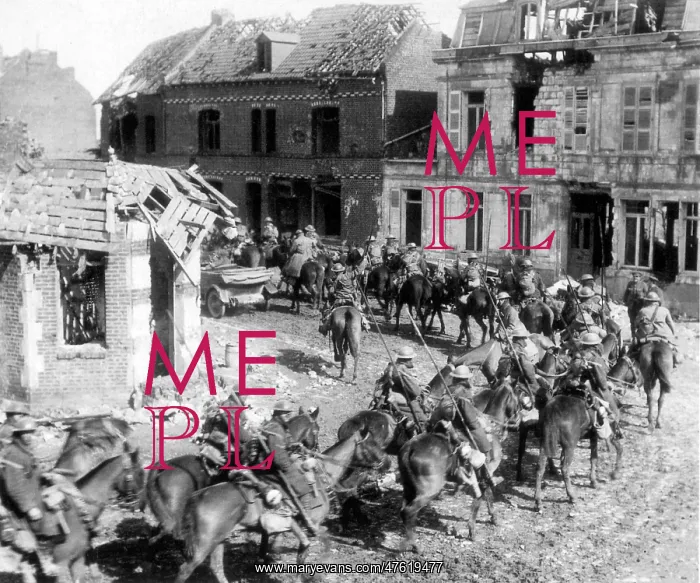
WWI, British Cavalry Regiment, 1914

British cavalry armed with both lances and rifles pass through an unidentified ruined village. Cavalry or horsemen were soldiers or warriors who fought mounted on horseback. A soldier in the cavalry is known by a number of designations such as cavalryman, horseman or trooper. In August 1914 all combatant armies still retained substantial numbers of cavalry and the mobile nature of the opening battles on both Eastern and Western Fronts provided a number of instances of traditional cavalry actions, though on a smaller and more scattered scale than those of previous wars. Once the front lines stabilized on the Western Front, a combination of barbed wire, machine guns and rapid fire rifles proved deadly to horse mounted troops. In 1914, lances were still being carried by regiments in the British, Indian, French, German, Italian, Portuguese, Spanish, Japanese, Turkish, Belgian and Russian armies. Seventeen Cavalry Reserve Regiments were formed by the British Army on the outbreak of the Great War in August, 1914. Many ended up being converted into infantry in order to satisfy the manpower demands of trench warfare

Picture No
10978438
Media ID
47619477
Size
3900px x 3246px (2.1MB)
Credit
© Photo Researchers / Mary Evans~~
Source
Photo Researchers
Date
1914

Pick your License

Please tell us the book title or ISBN

Please supply intended use


Restrictions Only for Ireland and United Kingdom

Cavalryman Cavalrymen Expeditionary Horseman Horsemen Lancers Lances Trooper


Features In These Collections

> Contributors > PHR
Gallery Wall Inspiration

Ilya Ilyich Mechnikov, Russian Immunologist
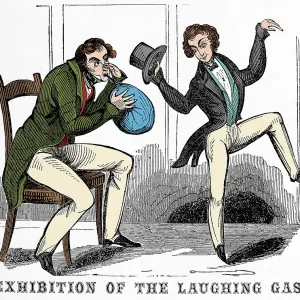
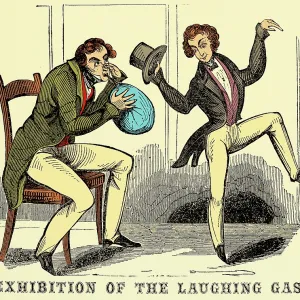
Laughing Gas, Nitrous Oxide
James Watt, Scottish Inventor and Engineer
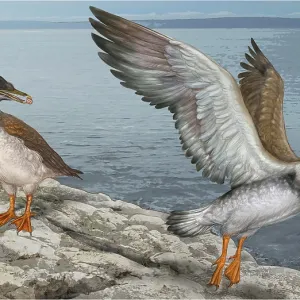
Asteriornis ancient bird, illustration
Hesperornis ancient bird, illustration
Icthyornis ancient bird, illustration
Confuciusornis sanctus ancient bird, illustration
Deinonychus ancient bird art, illustration
Laughing Gas, Nitrous Oxide
Thames Water Drop, 1850
Michael Faraday and Father Thames, 1855
Thames Water Drop, 1850
Michael Faraday and Father Thames, 1855
Cellular Plant Tissue, Matthias Jakob Schleiden, 1847
Henry Maudsley, British Psychiatrist
Swimming Manual, Digby, 1587
Russian Pirates, 1805
Ilya Ilyich Mechnikov, Russian Immunologist
Johnny Appleseed, American Nurseryman
Saint Paul, Christian Apostle
James Fenimore Cooper, American Author
Arthrobotrys, SEM
Rhizopus sexualis, SEM
Flint Hatchet, Stone Age Tool


© Copyright Mary Evans Picture Library - All Rights Reserved 2026
Powered by Media Storehouse®
We accept all major payment options so you can pay for the things you need in the way that is most convenient for you
Facebook     Twitter     Instagram