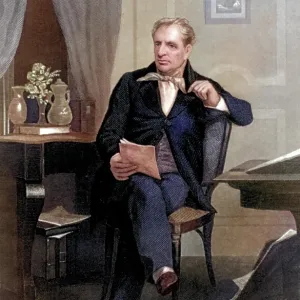

WWI, Generals von Hindenburg and Ludendorff
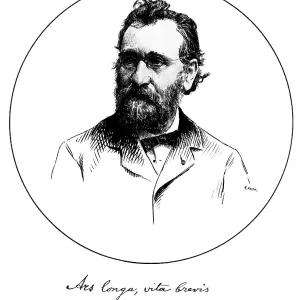
General von Hindenburg with General Ludendorff. Paul Ludwig Hans Anton von Beneckendorff und von Hindenburg (October 2, 1847 - August 2, 1934) was a Prussian-German field marshal, statesman, and politician, and served as the second President of Germany from 1925 to 1934. He enjoyed a long career in the Prussian Army, retiring in 1911. He was recalled at the outbreak of World War I and first came to national attention, at the age of 66, as the victor at Tannenberg in 1914. He retired again in 1919, but returned to public life one more time in 1925 to be elected as the second President of Germany. In 1932, Hindenburg, 84 years old and in poor health, was considered the only candidate who could defeat Adolf Hitler. He was forced to appoint Hitler as Chancellor in January 1933. In February, he issued the Reichstag Fire Decree which suspended various civil liberties, and in March he signed the Enabling Act, in which the parliament gave Hitler's administration legislative powers. He remained in office until his death at the age of 86 from lung cancer in 1934. Erich Friedrich Wilhelm Ludendorff (April 9 1865 - December 20, 1937) was a German general. From August 1916 his appointment as Quartermaster general made him joint head (with Paul von Hindenburg), and chief engineer behind the management of Germany's effort in World War I until his resignation in October 1918. After the war, Ludendorff became a prominent nationalist leader, and a promoter of the stab-in-the-back legend, convinced that the German Army had been betrayed by Marxists and Republicans in the Versailles Treaty. He took part in the unsuccessful coups d'etat of Wolfgang Kapp in 1920 and the Beer Hall Putsch of Adolf Hitler in 1923, and in 1925 he ran for president against his former colleague, Paul von Hindenburg. From 1924 to 1928 he represented the German V"lkisch Freedom Party in the German Parliament. In 1935 he published Der Totale Krieg (The Toal War) in which he argued that the entire physical and mor
Pick your License
Restrictions Only for Ireland and United Kingdom
Bain Beneckendorff Erik Hindenburg Ludendorff Quartermaster
Features In These Collections
> Contributors > PHR