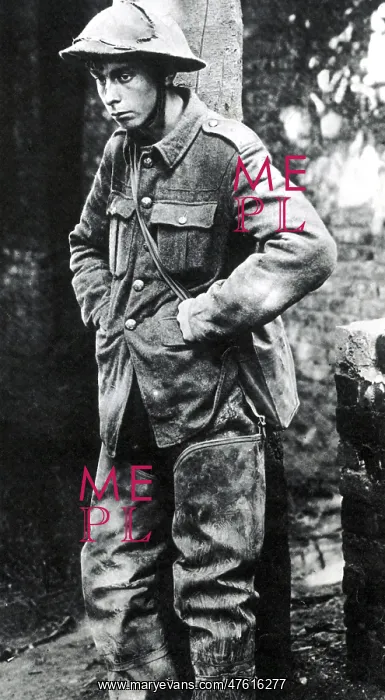
WWI, Solemn Soldier
The common infantry soldier had only a few weapons to use in the trenches: the rifle, bayonet, and hand grenade. Food was at times considered a luxury. Getting decent hot food from the field kitchens to the front line trenches could be impossible when a battle was either imminent or in full flow. Rations were small, meals repetitive, and hunger often the companion of fear and fatigue. The intensity of WWI trench warfare meant about 10% of the fighting soldiers were killed. Medical services were primitive and antibiotics had not yet been discovered. Relatively minor injuries could prove fatal through onset of infection and gangrene. Sanitary conditions in the trenches were quite poor, and common infections included dysentery, typhus, and cholera. Many soldiers suffered from parasites and related infections. Poor hygiene also led to fungal conditions, such as trench mouth and trench foot. Burial of the dead was usually a luxury that neither side could easily afford. The bodies would lie in no man's land until the front line moved, by which time the bodies were often unidentifiable. An estimated 65 million men were mobilized for WWI. No date of location available
Pick your License
Restrictions Only for Ireland and United Kingdom
Burnout Exhausted Exhaustion Fatigue Infantryman Infantrymen Tired Weary
Features In These Collections
> Contributors > PHR