
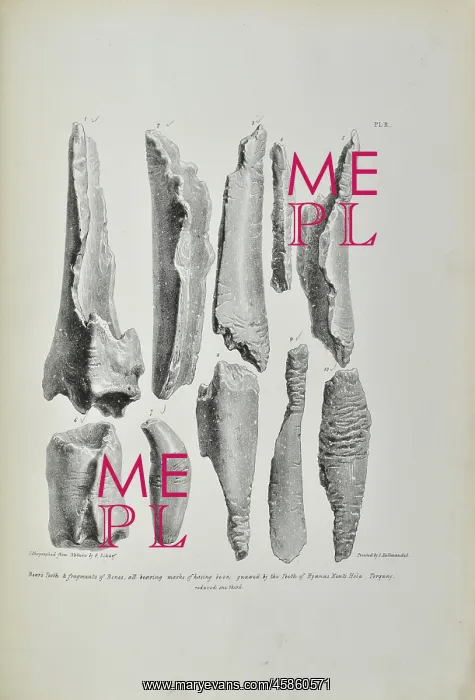
Bones bearing marks of having been gnawed by hyaenas
Bear's tooth and fragments of bones, all bearing marks of having been gnawed by the teeth of hyaenas, Kent's Hole, Torquay, by George Scharf (1788-1860). The Rev William Buckland (1784-1856) had been conducting excavations in other bone caves during this period and was therefore alerted. Not having the time to oversee the project himself, Buckland encouraged the Roman Catholic priest Father John MacEnery (1797-1841) to undertake the excavations. Between 1825-1829 McEnery found the bones of extinct animals such as bears, hyaenas, rhinoceros and deer. Most controversially MacEnery claimed to have found evidences of man-made flints in amongst the animal bones. Buckland, like many geologists in the early 19th century, held the widespread belief that humanity was of recent origin, specifically post-diluvian that is deriving from after Noah's Flood. Anything which diverged from this view was either dismissed or interpreted as being of later origin. It would not be until the Antiquity of Man debates in 1859 that MacEnery's findings were finally published. Lithograph
Pick your License
1784-1856 1788-1860 1797-1841 1825-1829 Alerted Amongst Anything Bones Buckland Caves Claimed Conducting Controversially Debates Deriving Dismissed Either Encouraged Evidences Excavations Finally Findings Flints Fossils Fragments Geological Geologists Gnawed Humanity Hyaenas Interpreted Macenery Man-made Mcenery Origin Oversee Palaeontology Recent Rhinoceros Scharf Specifically Therefore Tooth Torquay Undertake Widespread
Features In These Collections
> Contributors > GSO





![Earliest geological map of Ireland [1814]](/sq/800/earliest-geological-map-ireland-1814-48658336.jpg.webp "Earliest geological map of Ireland [1814]")


![Draft of the first geological map of Jersey [c.1828]](/sq/800/draft-first-geological-map-jersey-c1828-48658294.jpg.webp "Draft of the first geological map of Jersey [c.1828]")
![First geological map of Jersey [c.1828]](/sq/800/first-geological-map-jersey-c1828-48658274.jpg.webp "First geological map of Jersey [c.1828]")

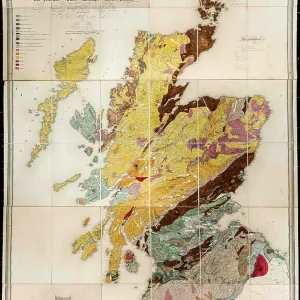
![First Geological Map of Scotland [1808]](/sq/800/first-geological-map-scotland-1808-48658245.jpg.webp "First Geological Map of Scotland [1808]")


