
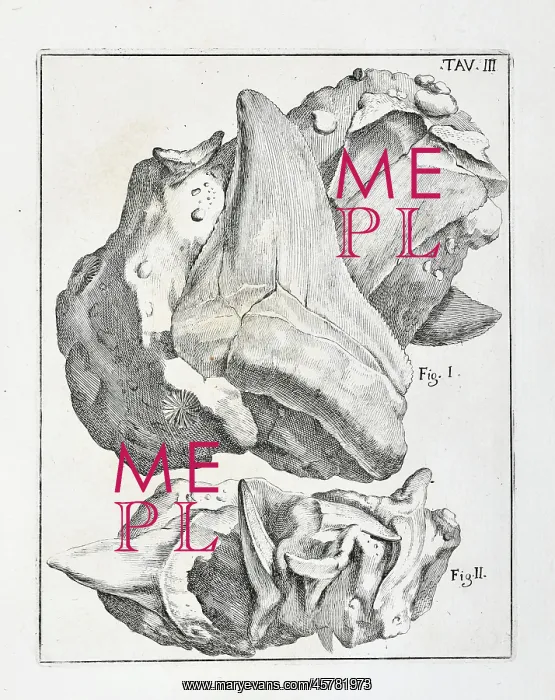
Glossopetrae (Tongue stones)
Glossopetrae (Tongue stones), by Pietro Santi Bartoli (1635-1700) from a drawing by Agostino Scilla (1639-1700). Plate 3 from De corporibus marinis lapidescentibus quae defossa reperiuntur, Romae: Typis Antonii de Rubeis (1747) which contains the first Latin translation of the Italian painter Agostino Scilla's only palaeontological (and heavily influential) work La vana speculazione disingannata dal senso (Vain speculation undeceived by sense) (1670) in which he argued that fossils were not the magical objects many believed them to be but were petrefactions (that is fossils) of once living organisms. The image is of Glossopetrae literally Tongue stones which Scilla (amongst others during this period) identified as fossilised shark's teeth. Engraving
Pick your License
1670 1747 Agostino Amongst Argued Bartoli Believed Contains Fossils Fossilss Geological Heavily Identified Literally Magical Organisms Palaeontological Palaeontology Quae Santi Scilla Scillas Sense Senso Seventeenth Shark Speculation Tongue Translation Vain Vana
Features In These Collections
> Contributors > GSO





![Earliest geological map of Ireland [1814]](/sq/800/earliest-geological-map-ireland-1814-48658336.jpg.webp "Earliest geological map of Ireland [1814]")


![Draft of the first geological map of Jersey [c.1828]](/sq/800/draft-first-geological-map-jersey-c1828-48658294.jpg.webp "Draft of the first geological map of Jersey [c.1828]")
![First geological map of Jersey [c.1828]](/sq/800/first-geological-map-jersey-c1828-48658274.jpg.webp "First geological map of Jersey [c.1828]")

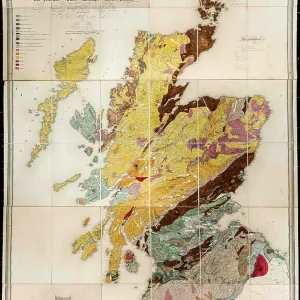
![First Geological Map of Scotland [1808]](/sq/800/first-geological-map-scotland-1808-48658245.jpg.webp "First Geological Map of Scotland [1808]")


