Simplicissimus, No 38, 16th September 1942
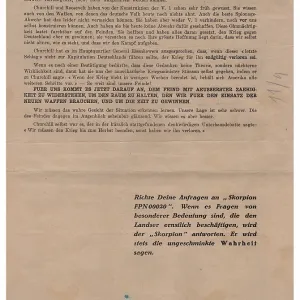
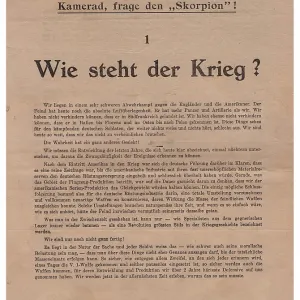
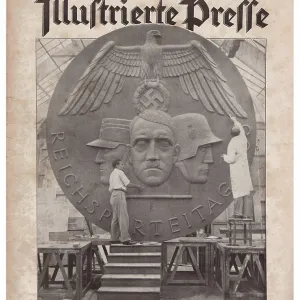
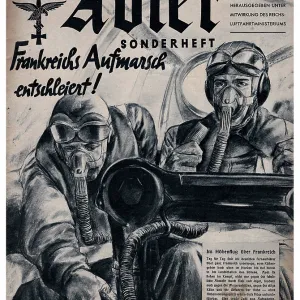
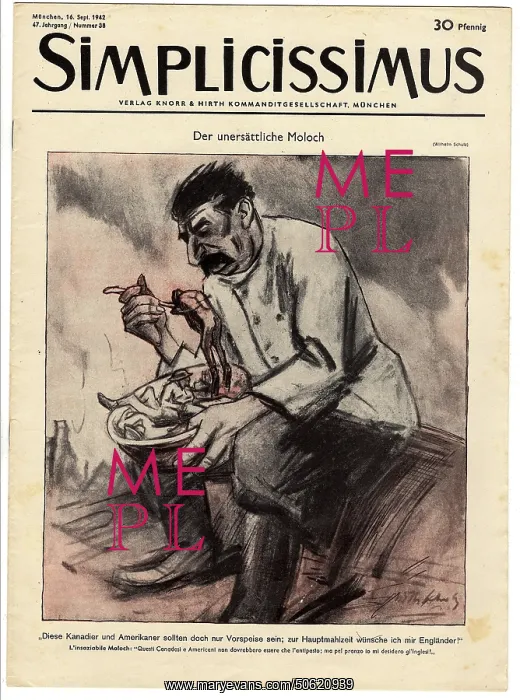
Simplicissimus No. 38, 16th September 1942, 47 Jahrgang. (Years of publication) (The name is a latin term meaning simplest and is the name given to the protagonist of a 17th-century novel, Der Abenteuerliche Simplicissimuss, in which a naive and innocent boy with the name Siplicissimus, navigates a corrupt 17th-century Europe). Simplicissimus was a long-running political satire magazine published continuously from 1896 through to September 1944, when, as for the majority of print publications in the Third Reich, paper shortages forced it to cease. The magazine was popular and known for its biting satire, attacking bourgeois morality, the church, civil servants, lawyers and the military. During the Weimar period it attacked the politics of the left and the right equally, including numerous Adolf Hitler caricatures, and these continued into 1933 even after the Nazis regime assumed power. However, later in 1933, Simplicissimus underwent Gleichschalting - the process of coordination and Nazification, which forced publications to align with National Socialist ideology and state control. This involved replacing journalists who didn't conform, sacking Jewish or those of non-Aryan descent and ensuring that all content served approved Nazi objectives. Following this Simplicissimus published increasing antisemitic, anti-British and anti-American material which hardened once Germany was at war. Simplicissimus was published from 4th April 1896 to No 37 to the 13th September 1944. The cover picture shows the Russian leader Joseph Stalin eating Allied dead American and Canadian soldiers from a bowl with the title and text reading The insatiable Moloch - These Canadians and Americans should only be appetizers; for the main meal, I want English!'. In German, calling a person or entity a Moloch is a derogatory term for a merciless, all-consuming, and monstrous power that demands endless sacrifice. The connotation is deeply negative and implies a destructive force that devours everything in its path, often for little or no positive gain. This meaning, which has existed in German for at least a century, was famously captured in Fritz Lang's 1927 film Metropolis, which portrayed a machine demanding the lives of factory workers as a Moloch'. The term's origin is the biblical god Molech, who was said to demand child sacrifice
Pick your License
Anti-american Calling Canadians Connotation Deeply Demand Demanding Demands Derogatory Destructive Devours Endless Entity Everything Existed Famously Gain Implies Insatiable Langs Least Long-running Meaning Merciless Metropolis Moloch Monstrous Often Origin Portrayed Positive Sacrifice Simplicissimus Term Terms
Features In These Collections
> Contributors > WIN